How to capitalize on the new trend in Yoga dive travel.

by Meredith Calvert, Ph.D., MSD, RYT 500, Owner, Meri Yoga, CA
Click here to read this article on our Flippingbook platform.
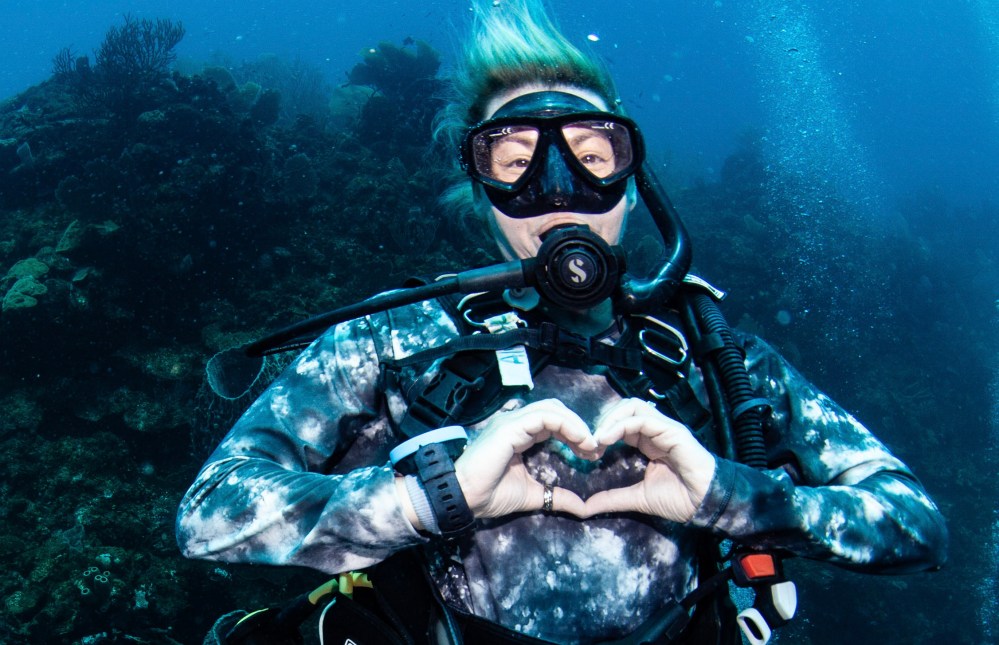
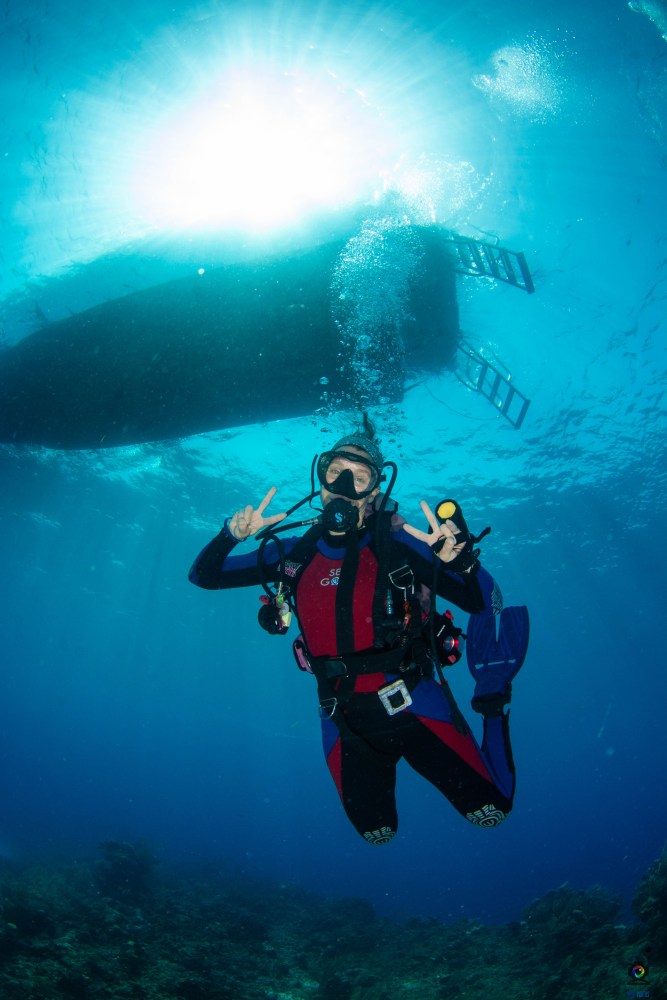
WE ENDED THE dive and waited for the boat to come to us, bobbing serenely in the warm western Caribbean Sea just off Roatán. I was with two women who, just two days prior, were both convinced they would never dive. Frustrated, anxious, and certain their fear would win, they had been in total disbelief that a serene scuba experience would ever be possible for them. These were suburban moms, not thrill-seekers but soul-searchers, looking to challenge old self-beliefs and find awe and connection outside a world of routine, obligations, and never-ending to-do lists.
Here in this moment, with blue sky above and turquoise sea all around us, their wide smiles and steady breathing told the story of what happens when we move past fear and learn to trust ourselves.

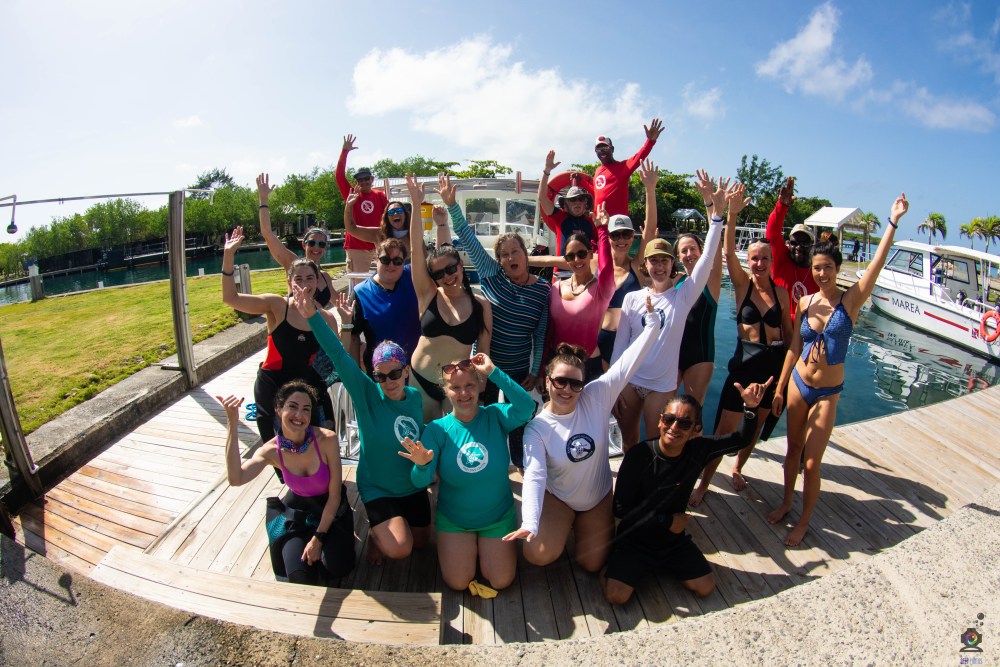
That evening, we wrapped up a sunset yoga session in our overwater pavilion at Barefoot Cay as part of SeaCalm, the yoga and scuba retreat I’ve been hosting for the past three years. We traded stories about the day’s marine encounters and the meditative pull of the dives themselves and talked about how small conservation-focused efforts at home, such as reducing plastic use, could ripple out to help protect a reef thousands of miles from their kids’ soccer games and daily commutes.
Scuba diving used to carry a reputation as a macho thrill-seeker’s sport, but the tides are shifting. Dive tourism’s fastest-growing segment isn’t chasing adrenaline; it’s coming to the ocean for recovery, connection, and meaning. For a growing share of divers, the ocean has become less about sport and more about doing inner work. What these divers have in common, whether they are solo travelers, women, older divers, or other wellness-focused guests, is what they’re diving for. They’re descending not to conquer something, but to meet themselves and the natural world in a place with with no cellphone signal or distractions.

There’s a reason the ocean quiets our mental chatter and gives us this urge to go deeper within. Researcher Wallace J. Nichols introduced the term ‘Blue Mind’ to describe the calming effect of being near, in, or under water: cortisol drops, and dopamine, our feel-good neurotransmitter, rises. In the presence of nature’s wide-open spaces, we attain a mindset environmental psychologists call “soft fascination,” an effortless attention that lets the analytical brain, so overstimulated in modern life, finally quiet down. This effect is amplified underwater, where the quiet focus of diving and the rhythmic sound of our own breath create a meditative state far from notifications. None of this requires a diver to consciously practice mindfulness; it’s built into the sport itself.
There’s also a well-documented lift that comes from overcoming fear and choosing to try something new. Brent Webb, owner of Scuba Adventures Plano in Plano, TX, put it plainly: “I’ve come to realize that people rarely walk into a dive shop looking for confidence or personal growth. They come because they want to learn to scuba dive. The interesting part is what happens afterward. Somewhere between that first breath underwater and earning a certification, many discover they’re capable of far more than they thought they were. I think that’s what keeps people diving. Scuba is the activity; personal growth is the outcome.”
Resorts that name and lean into this effect, rather than treating it as incidental, are the ones capturing both this shift and the divers who seek it. The hook can still be adventure and travel; what matters is designing experiences that leave room for the deeper payoff diving can offer, too.
Wellness programming isn’t a trendy add-on for the occasional guest who skips the open bar; it’s built for the divers already here. The demographic profile of the typical diver is rapidly changing: men still make up roughly six in ten active divers overall, but newer divers skew notably more female. Caucasian Americans now have a lower scuba diving participation rate than Latino and Asian American divers, and the typical diver profile is now a well-educated millennial earning six figures. Featuring instructors and divemasters who reflect the range of people actually walking onto the boat and using language that makes room for someone chasing clarity as much as certification signals that they are welcome before a guest ever books.
Paid Advertisement
Building this as a brand, not a single event, is where the real retention lives. SeaCalm didn’t start as a business plan. It grew out of my own experience as an anxious novice diver and my training as a neuroscientist, yoga instructor, and breathwork instructor. Over more than 25 years as a diver, including plenty of challenging dives, I’ve learned firsthand the power of mindfulness and breath control for staying calm underwater. Yoga and diving bring me to the same meditative headspace, and I designed SeaCalm to share that combination with guests. What makes it work as a recurring program rather than a one-off trip is consistency: the same small-group structure and partnerships with local providers, including a cacao ceremony practitioner, the steward of a nearby nature sanctuary and hiking area, and a local coral conservation group. Guests come back year after year and bring their friends because the retreat isn’t chasing a new theme every season; it’s deepening the same one. That model can translate anywhere the right elements exist: a small, private resort with a welcoming space for yoga and beautiful, accessible diving. Following the same model that has worked so well at Barefoot Cay, SeaCalm will expand to two additional locations in 2027.

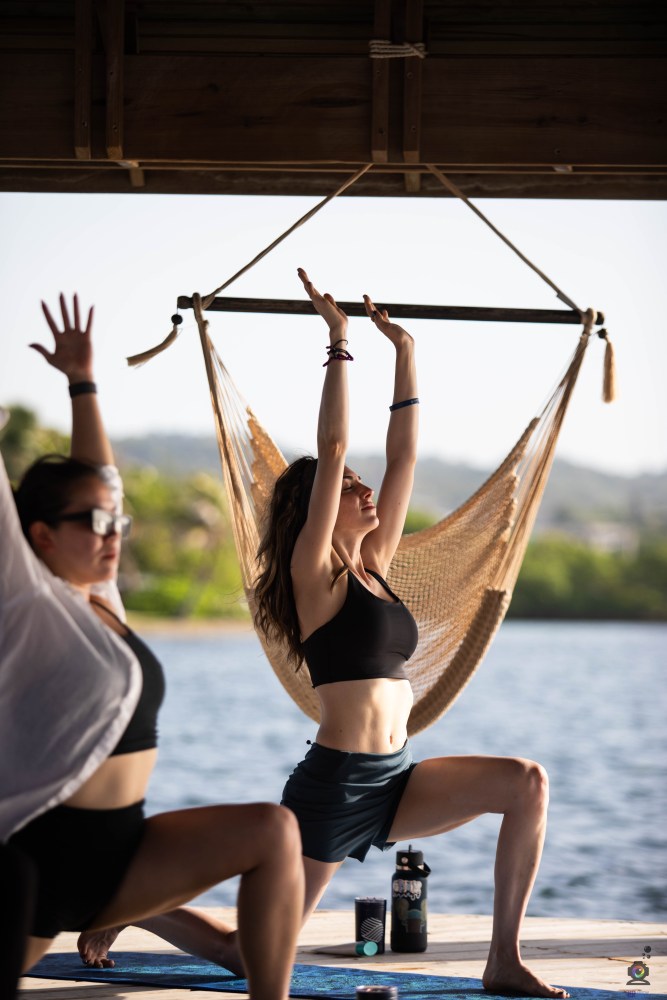
For resorts, the lesson isn’t “add a yoga class,” it’s that a consistent guest experience, not a rotating list of add-ons, is what builds a brand. There are simple additions resorts can make to start capturing this expanding market. Offering pre- and post-dive yoga or breathwork is a practical, low-cost start, and one with real value to divers: these practices are linked to better surface air consumption and buoyancy control. Yoga already shows up on DEMA’s list of top activities scuba divers do outside the water. This crossover audience already exists; it’s just underserved. Echoing Brent’s point, the industry is good at getting people in the water but less practiced at recognizing the reasons they stay. Marketing that speaks to why someone dives, not just what gear they need or how many dives they can squeeze into a day, matters just as much as the programming itself.
Finally, recognize that a diver traveling to experience something meaningful prioritizes safety and small-group intimacy, and design dive packages accordingly. The retreat model gives resorts a wellness-centered way to package a destination for this emerging market: curated experiences, built-in companionship, and conservation-minded add-ons like reef cleanups, coral restoration dives, or citizen-science monitoring trips alongside yoga, meditation spaces, and quiet time. Whatever the format, tying it to something real, such as a local reef conservation project or a collaboration with community wellness providers is what separates a retreat guests will always remember from one they simply attended. The next wave of dive tourism isn’t going to be won by the resorts packing boats and promising thrills, but by the ones willing to imagine and welcome a different kind of diver aboard their boats.
References:
Nichols, W. J. (2014). Blue Mind: The Surprising Science That Shows How Being Near, In, On, or Under Water Can Make You Happier, Healthier, More Connected, and Better at What You Do.
Murrin, E., Taylor, N., et al., (2023). Does physical activity mediate the associations between blue space and mental health? A cross-sectional study in Australia. BMC Public Health, 23.
Basu, A., Duvall, J., & Kaplan, R. (2019). Attention Restoration Theory: Exploring the role of soft fascination and Mental Bandwidth. Environment and Behavior, 51(8), 956-981.
McDonnell, A.S., Strayer, D.L., (2024). Immersion in nature enhances neural indices of executive attention.
Sci Rep 14, 1845. https://www.businessofdiving.com/scuba-diver-socio-demographic-profile
Calvert, M. (2026). Why Yoga Makes You a Better Scuba Diver. DiveNewsWire, May 2026.
Paid Advertisement

Click here to read this article on our Flippingbook platform.
More from This Issue:
THIS MONTH’S ADVERTISING PARTNERS