Diving with and teaching kids is NOT, and can never be, about money or using the maximum allowable ratios.

by Margo Peyton, co-owner Kid’s Sea Camp, Columbia, SC
Kids Sea Camps has certified over 8,000 youth as divers and offers travel programs for families and empty nesters.
Click here to read this article on our Flippingbook platform.
AS A PADI OPEN WATER Scuba Instructor (OWSI) and Master Scuba Diver Trainer (MSDT), I have more than 36 years of diving experience. I created a company that specializes in teaching families how to safely enjoy scuba diving with their children. My goal was to create a safe environment in which to train my own two children and thousands of others.
Over the past 26 years, I have helped more than 8,100 young divers earn PADI certifications and created a safe, fun place for tens of thousands of divers to dive with their kids. My success is deeply rooted in the exceptional training, standards, tools, and support I have received through PADI, along with many years of experience diving with and training children.
I remain open to learning from every experience, not only from the children I teach, but also from their family members and the many instructors with whom I have had the honor of working. That means factoring the changing conditions, circumstances, abilities, and needs of each individual into my dive plans and curriculum. PADI has equipped me with invaluable tools, standards, mandates, and resources, along with an endless amount of advice anytime to foster safe, enriching experiences.

I believe it is ultimately up to each instructor and dive shop to build upon the foundation provided by our training agencies. Dive shops and instructors must grow through support, personal care, attention to detail, experience, and a commitment to continuous improvement. Both must commit to an ultra-conservative approach when teaching and diving with children.
Ratio decisions must be based on the instructor’s experience and comfort level, the students’ ages and abilities, environmental conditions, and the type of diving planned. Dive shops that want to include children and families in their training, trips, and daily diving must understand that teaching children is different from teaching adults. Instructors must convey any reservations, concerns, and questions.
Diving with and teaching kids is NOT and can never be about money and sticking to the maximum mandates. This is a battle I have fought my entire career with almost every operator at one time or another, and still do. Teaching and training kids and families is about creating and contributing to the future of diving. I made a bunny slope for the dive industry, and it was very needed. A safe place to learn with kind, gentle, patient instruction and many times 1:1 training, hand-holding, and talking through fears. This is not just needed, but required with kids.
The dive industry has experienced too many preventable accidents. This editorial focuses on prevention through preparedness, conservative decision-making, good habits, and practices developed through my own experience – to ensure every child thrives safely underwater. By embracing these practices, we can safeguard lives while nurturing the next generation and recognizing how vital children and their families are to the future of diving.
The Vital Role of Kids and Families in Diving’s Future
Children represent the heartbeat of our sport. Introducing them to diving is not just about certification. It is about igniting lifelong passions, building confidence, and creating bonds that strengthen families and their communities. Families that dive together share incredible experiences. Grandparents continue diving not only for themselves, but also to share their passion with their grandchildren in a gentle, kind, and nurturing way.
I teach parents just as much, sharing with them at the beginning of each week the practices they need to be their best diving selves. They need to start getting rid of old habits and creating new ones that will allow them to dive safely with their kids and grandkids.
I encourage avoiding distractions, staying close together, using a writing slate for communication, going slowly, and learning their children’s profiles. Many parents are never even told what those are, nor are they reminded that if they dive with their kids, they MUST be on the same gas profiles. Dive instructors need to remind parents that there are new skills and signals and encourage them to take a refresher course, an advanced course, or even a rescue course to be the best divers they can be with their kids or grandkids.
Understanding the Stakes
Diving with children is a profound responsibility that can also be deeply rewarding when approached with positivity and preparation. Unlike adults, children are still developing physically, emotionally, and cognitively. They are accustomed to trusting adults, accepting adult authority, and relying on adults to keep them safe. This can affect their decision-making and diving habits. Children depend on us, their instructors and parents, to provide a safe and supportive environment. With PADI’s standards as my guide, I have learned to turn potential risks into opportunities for learning, confidence-building, and growth.
Remember that maximum instructor-to-student ratios are precisely that: maximums. They represent the upper limit. I do not interpret them as a mandate to push boundaries. A speed limit of 70 mph does not require anyone to drive at 70 mph, especially when conditions are poor. In the same way, I adjust ratios downward according to the conditions and circumstances present during each Kids Sea Camp trip.
I consider the type of diving; each child’s age, maturity, experience, language skills, special needs, and individual feelings; and any other information the parents share with me. That may sound like a lot, but I think about my own children when they were learning to dive. I remember the level of trust I needed and the ratios that made me comfortable. I apply that same conservative methodology to every child. I make every decision as if each child were my own. Lower ratios have become a hallmark of Kids Sea Camp because they allow us to nurture each child’s individual journey comfortably and safely.
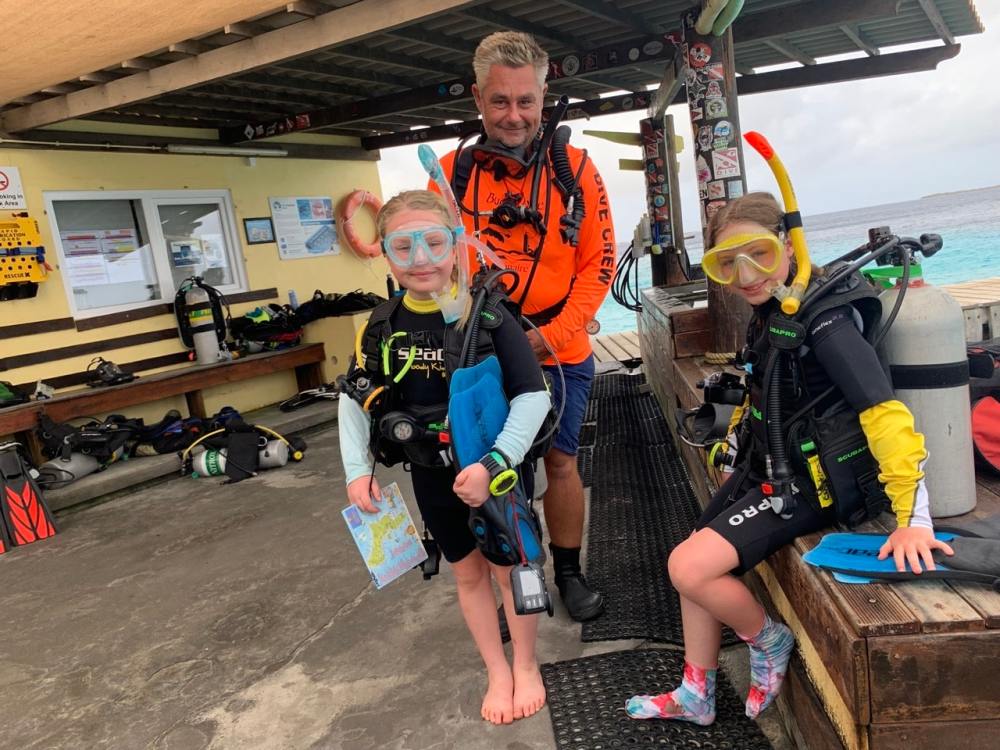
For children ages 8 through 12, I maintain, and require our partner operators to provide, a maximum ratio of two children per instructor. This often allows an instructor to hold one child’s hand with each hand for reassurance. For ages 13 through 17, I allow a maximum ratio of one instructor to four students under the best conditions. I frequently add an assisting divemaster when particular skills, dives, or student needs require more attention. For children with special needs, I require one-on-one supervision.
These are the conservative policies I use within Kids Sea Camp. Every instructor and operator must also follow the applicable training-agency standards, local regulations, certification requirements, and individual student limitations. I employ instructors and divemasters whom I fly to destinations around the world. This can cost tens of thousands of dollars each year, but I will never reduce supervision to save money. We begin planning ratios months before the courses so the needs of every child and adult can be met.
Parents and aging grandparents may also require additional attention. It is common for me to assign an instructor and divemaster to a family of four. When newly certified children dive with their instructor, I may place another divemaster in the water to observe and assist the parents. This may sound excessive, but parents and grandparents diving with children for the first time may be nervous and inexperienced in caring for someone else underwater. Having the family dive with the certifying instructor who has worked with the children all week allows parents to observe the team’s procedures and communication while building comfort and confidence in diving with their kids. I have made this family dive part of every trip.
This approach improves safety, reduces stress, allows for greater patience, and creates an environment in which children can thrive and develop a lasting love of scuba diving. They feel safe, secure, and excited rather than overwhelmed. The dive team also feels less stressed, better able to help, and more confident.
Creating a Culture of Support
I believe it is extremely important to cultivate a culture of support and provide additional training for instructors. Dive shops and owners play a pivotal role in safety by empowering instructors to voice concerns without fear of reprisal. During my 36 years in diving, I have learned that even excellent instructors may not be suited to teaching children or may simply prefer not to do so. That is okay. It should not diminish their value as instructors.
I encourage honesty. When an instructor is uncomfortable with youth diving, lacks experience, or needs to shadow a seasoned colleague, I provide that opportunity. Some instructors have told me, “Margo, I’d rather be on an adult boat.” Others may not have the mindset, patience, or passion required for nurturing young divers. I respect that candor. Honest self-assessment prevents mismatched assignments and creates opportunities for instructors who genuinely want to develop their youth-diving skills.

Children should not be used as teaching tools, test cases, or practice opportunities. Only experienced instructors who are emotionally and physically prepared should be assigned to teach them. Instructors should continually evaluate their own comfort levels and readiness. Ask yourself whether you can give the students 100 percent of your attention. When the answer is no, speak up and step back. Postpone the class or transfer it to someone who is prepared. Dive shops can support this process by offering training, mentorship, adequate staffing, and flexible scheduling. I never ask my team to do something I would not do myself.
Parents and students must also respect an instructor’s safety decision. If a pilot said that conditions were unsafe or that they were not well enough to fly, passengers would expect the flight to be delayed or canceled. We need to show that same understanding toward instructors. The possibility of customer complaints or social media attacks can weigh heavily on instructors and dive shops. However, pressure from customers who are told that conditions are unsuitable and that a course or dive must be discontinued must never influence the safety decision. Standing firm can be difficult, but the alternative is unacceptable.
Paid Advertisement
Core Best Practices: Unwavering Supervision and Communication
The foundation of safe youth diving is direct, undivided supervision paired with habits that make every dive a positive experience. From the moment students enter the water until they are safely out, the instructor’s attention must remain on them. This means eliminating distractions. I advise leaving cameras, lionfish containers, and lionfish spears behind when diving with children. When a skill demonstration ends, do not assume your responsibility has ended. Continue monitoring every diver until everyone is safely out of the water.
Clear handovers are also essential. Never assume another divemaster or instructor will automatically supervise your students if you must surface or leave the group. Responsibility must be explicitly transferred and acknowledged. Headcounts before, during, and after every dive are nonnegotiable. So are thorough equipment checks covering weights, cylinder pressure, BCDs, releases, and fit. I require children to communicate their exact remaining cylinder pressure rather than give a vague “OK” signal. Children may hesitate to speak up because they do not want to be the person who ends the dive. Exact pressure checks help identify developing gas concerns early.
At Kids Sea Camp, I do not permit minor divers to participate in an unsupervised buddy team without an assigned, qualified adult or dive professional. Certification does not eliminate the need to consider age, maturity, experience, agency standards, operator policies, and local requirements. I have encountered situations in which certified minors were paired together during underwater activities without an adult or dive professional assigned to them. The argument was that they were certified and could therefore buddy together. That is not a risk I accept within my programs. Dive shops, parents, and instructors should establish, communicate, and follow a clearly documented supervision policy for all minor divers.

Engage Parents and Review Medical Information
Instructors, divemasters, and dive shops should establish procedures for engaging parents early. Ask about the child’s fears, medical history, maturity, behavior, prior water experience, and any special considerations. Instructors should personally review the required medical forms and relevant information before accepting an assignment. They must understand the students they are expected to teach and decide whether they have the experience, qualifications, staffing, and comfort level required.
Do not assume someone else has completed every necessary review. When a medical questionnaire contains an affirmative response and physician approval, the instructor should still observe the student, ask appropriate follow-up questions, and follow current agency requirements. Medical approval should come from an appropriately qualified physician who understands the relevant condition and the physical and psychological demands of diving. The authorization should be complete, signed, dated, and consistent with the applicable training-agency form. The instructor is not there to diagnose a condition or overrule a physician. However, an instructor must retain the ability to decline or postpone participation when the student’s condition, behavior, equipment, circumstances, or the planned environment creates a concern that cannot be safely managed.
Listen to the Child
I have learned to ask children simple questions while getting to know them: “Are you feeling okay?” “Is there anything you are afraid of?” “Are you looking forward to diving?”
After the dive, I ask: “Was that fun?” “Do you have any questions or concerns?”
These simple questions can reveal important information.
Children often want to please their parents and may hide anxiety to avoid disappointing them. Reassure them that there will always be another opportunity to dive. Let them know that training can slow down, stop, or resume later. Build rapport during confined-water sessions. Observe who appears comfortable, distracted, hesitant, or anxious, and adjust your approach accordingly.
Many children benefit from repetition. Practice equipment setup, skills, and signals as often as necessary. Do not cut corners or complete tasks for children simply to save time. Use slates for nonverbal communication and offer hand-holding when appropriate. Monitor body language throughout the dive. Goosebumps may indicate cold. Wide eyes may indicate fear. Sluggish movement may indicate fatigue. Crying should immediately stop the activity.

Continually assess whether each child demonstrates the maturity required for the activity. Ask privately before and after dives how they are feeling so they have space to answer honestly without peer pressure. Avoid mixing adult and youth classes unless the structure, staffing, and family participation make it appropriate. Children’s energy and learning needs are different. They may become distracted and require a fun, unhurried, low-pressure environment. Make sure adequate staff are available. When one child needs one-on-one assistance, someone must remain responsible for supervising the rest of the group.
The Lasting Impact
Teaching and diving with children is about inspiring the future of diving, changing lives, and paying it forward. When instructors embrace conservative ratios, vigilant supervision, and empathetic communication, supported by a strong training framework, we honor the trust parents place in us. Treat every child as if they were your own. Calm fears, build confidence, and prioritize fun without compromising safety. Through preparation, good judgment, and consistent supervision, we can reduce the risk of preventable incidents and help diving remain an incredible family experience.
If you are an instructor who is passionate about youth diving, seek mentorship. I am always willing to share what I have learned. If teaching children is not your strength, focus on adults. The industry needs excellence in every area. Dive shops should support their teams with appropriate resources, mentorship, staffing, and a safety-first culture.
Paid Advertisement

Click here to read this article on our Flippingbook platform.
More from This Issue:
THIS MONTH’S ADVERTISING PARTNERS