Wreck Diving Paradise – Over 60 World-Famous Wrecks to Choose From

PLANNING A TROPICAL TRIP for a dive group often means balancing very different wish lists. Some divers want dramatic shipwrecks and wartime history, while others are looking for colorful coral reefs and abundant marine life. Add the desire for an English-speaking destination that uses U.S. currency, and the list of options becomes much shorter.
Planning a tropical trip for a dive group often means balancing very different wish lists. Some divers want dramatic shipwrecks and wartime history, while others are looking for colorful coral reefs and abundant marine life. Add the desire for an English-speaking destination that uses U.S. currency, and the list of options becomes much shorter.
For group leaders facing that challenge, Chuuk Lagoon offers a compelling solution. Better known to many divers by its former name, Truk Lagoon, this Micronesian destination contains more than 60 wrecks from the U.S. attack on the Japanese fleet stationed there during World War II.
More than 82 years later, many of those wrecks are showing their age, making this an important time to experience them before further deterioration takes its toll.
The wrecks are only part of the appeal. Many are richly covered with corals and surrounded by abundant marine life, giving reef lovers plenty to enjoy while wreck enthusiasts explore one of the most historically significant diving destinations in the world. For a group leader trying to satisfy both sides, Chuuk may be the rare destination that truly delivers both.
The Making of a Ship Graveyard
Germany was the first European nation to colonize Chuuk (after purchasing it from Spain) and much of Micronesia at the end of the 1800s, but German colonists reportedly had trouble pronouncing the ‘ch’ portion of the name and replaced the ‘ch’ sound with ‘tr,’ producing a pronunciation similar to ‘Truk.’ During WWI, Japan was an ally of the United States, England, and France and was tasked with attacking the German East Asia Squadron and taking over German-held islands.
After the war, Japan was awarded control of these islands, including Chuuk, but instead of reverting to the original name, Japan adopted the German pronunciation and the atoll area was still called Truk Lagoon, a name that held until 1990 when the Federated States of Micronesia officially reverted to the original Chuuk name, although many still call it Truk.
During WWII, Japan used the large lagoon as a natural naval base, similar to the U.S. naval base at Pearl Harbor in Hawaii, but also constructed many airfields to control the airspace over Micronesia. In February 1944, the United States sent a large naval task force of five large aircraft carriers (Enterprise, Yorktown, Intrepid, Essex, and Bunker Hill) along with four escort carriers, six battleships, four light carriers, 10 cruisers, 28 destroyers, and 10 submarines in an attack named “Operation Hailstorm” to destroy the ships and airfields based at Truk Lagoon.
This was considered by many to be the U.S.’s “payback” for Pearl Harbor.
Prior to the attack, repeated American reconnaissance flights over Truk spooked Japanese Vice Admiral Masami Kobayashi, and he ordered most of his naval vessels out of Truk Lagoon to relocate to other bases before Operation Hailstorm began.
(Side note: the fictional training exercise in the show Star Trek called the “Kobayashi Maru” is considered to be named after this admiral, who was faced with an impossible task. “Maru” means cargo ship.)
For nearly three days, American bombers and torpedo planes, plus surface ships, sank approximately 50 of the remaining Japanese ships in the lagoon and destroyed about 250 aircraft. Most of the ships sunk were large, armed ‘maru’ cargo ships with deck guns on the bow and stern carrying vital supplies of fuel, ammunition, and repair parts. The loss of these ships and supplies, along with the destruction of the airfields, crippled Japan’s ability to stop the Allies’ push toward Japan.



Diving the Lagoon
For dive trips, Truk/Chuuk Lagoon (the Lagoon) offers something for everyone, even snorkelers and freedivers. The atoll includes 11 major islands, 46 smaller islands within the lagoon, and more than 40 islands around the protective fringing reef. Located in the southwestern Pacific Ocean just above the equator, the water temperature stays warm, usually 83-86ºF (28-30ºC) in the summer and 81-84ºF (27-28ºC) in the winter. Some of the shallow ship and plane wrecks can be easily viewed in the clear water by snorkelers and explored by freedivers.
Many shipwrecks can be visited by recreational divers, with either the bow or stern beginning at approximately 30 to 40 feet (9-12 m) while the opposite end lies deeper than 100 feet (30 m).
The Lagoon also attracts many technical divers as several of the ships lie in the 150-220-foot range (46-67 m). One of the popular deep wrecks, dubbed the ‘Million Dollar’ wreck, is the San Francisco Maru (121-203 ft./37-62 m), which contains tanks, trucks, mines, and shells in its cargo hold, deteriorated enough in 2025 to begin leaking oil into the lagoon.
Some cargo ships are off-limits to divers because they are leaking caustic aviation fuel from their containers. Most of the other ships in the lagoon carry munitions that shouldn’t be disturbed.
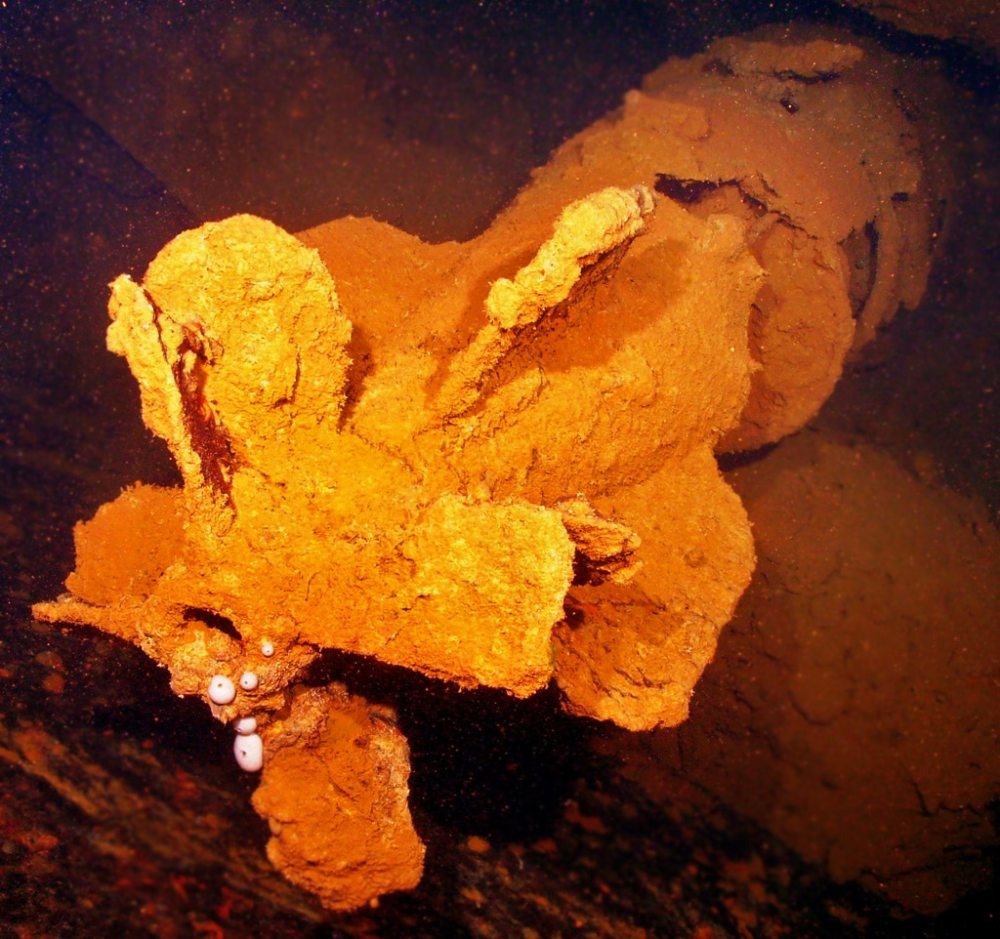
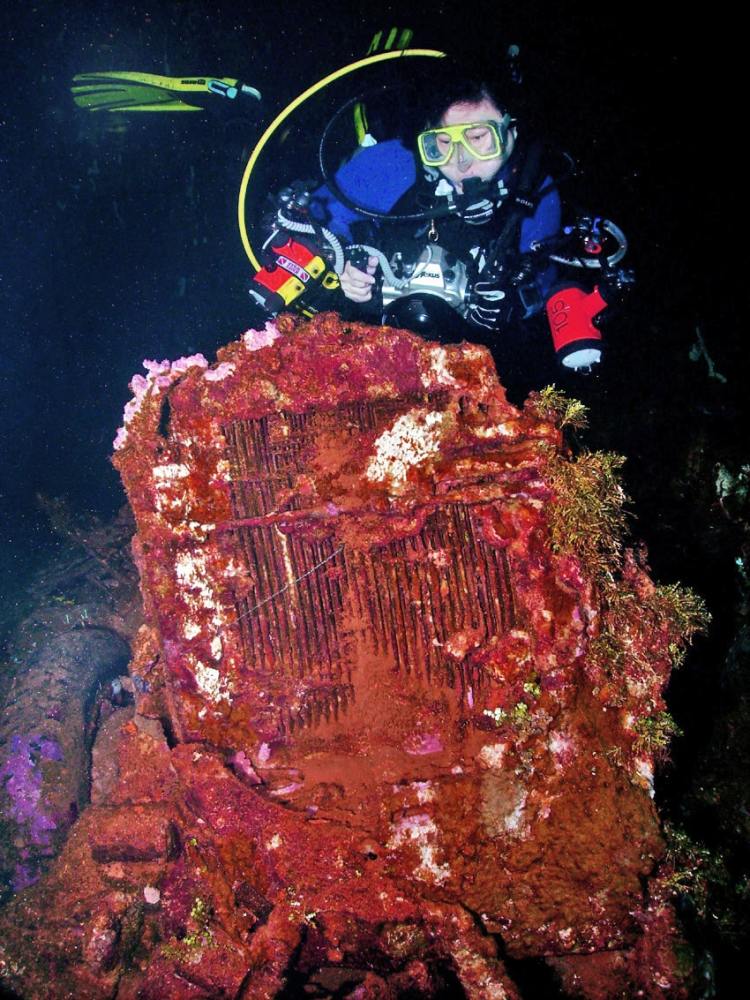
Previously, recreational divers could explore the cargo holds (with local guides) and swim past piles of torpedoes in the sub-tender Heian Maru or see the 18-inch artillery shells that were bound for the battleship Yamato that are in the hold of the Yamagiri Maru. One favorite dive is the Fujikawa Maru. Divers first descend to the bow gun, which is covered with colorful soft corals, before entering the cargo hold to view a Zero aircraft, where many divers in the past have squeezed themselves into the cockpit for a prize souvenir photo. Local divemasters should first assess whether these areas remain safe enough for visiting divers as the ships continue to deteriorate.
For divers who prefer fish and corals, the Lagoon is home to more than 300 species of reef fish and abundant colorful hard and soft corals, plus sea fans, varieties of sponges, and other marine life on both the shipwrecks and reefs. Night dives reveal a different world of hunters, including octopuses, eels, crustaceans, and reef sharks that scour the wrecks and reefs in search of prey.
The lagoon gained international attention as a dive destination in 1971, when a television documentary about Jacques Cousteau’s 1969 expedition aboard Calypso was released. The crew also took home many artifacts from the ships which, prompted the local government to impose strict regulations and penalties, including fines and imprisonment. for any divers trying to take souvenirs.
Today, if divers find any interesting artifacts on the ships, they either leave them where they are or place them on the deck or hull of the ship for other divers to view.
Paid Advertisement
Planning Your Lagoon Dive Trip
While diving the Lagoon is accessible year-round, the peak season is during the “dry season” from December to April, when the seas are calmer and the weather more stable. Dive travelers should plan to arrive at Chuuk International Airport (TKK) on Weno. Most flights stop first in Guam or Pohnpei. At the time of publication, the airport is served by United Airlines.
Divers are primarily served by two land-based dive centers and two liveaboards. For land-based resorts with associated dive centers, either contact the Blue Lagoon Dive Shop and Resort (trukbluelagoonresort.com/diveshop) or the Truk Stop Hotel and Dive Center (trukstophotel.com). Both dive centers can support mixed-gas technical diving.
Divers who want to stay on the water can contact either The Odyssey liveaboard (trukodyssey.com) which is a 132-foot (40 m) ship housing 16 guests, or contact the Thorfinn liveaboard (thorfinn.net) which is a 170-foot (52 m) ship housing 20 guests.
For nondiving excursions, Weno offers land-based tours and boat trips to nearby islands. The Japanese converted Nefo Cave into an artillery bunker to defend the base.




The guns remain in place, and the site offers a scenic overview of the lagoon. On Tonowas Island, visitors can explore the old Japanese Military Command bunker, underground tunnels to storage facilities, plus an old Shinto shrine. Visitors can also travel to the highest mountain on Weno, Mt. Tonaachaw, where you can relax in the pool at the base of the Wichon Waterfall.
After World War II, the United States administered the lagoon and much of Micronesia until the Federated States of Micronesia assumed control. English is an official language, and many residents also speak Chuukese. The currency is the U.S. dollar. Electrical appliances also run using 110-volt, U.S.-style electrical outlets. To reach the Lagoon region, you must cross the International Date Line from the United States, so it is 17 hours ahead of Pacific Coast time. No visa is required for travelers from the United States.
Whether you are a recreational diver, technical diver, shipwreck enthusiast, marine life aficionado, or just a history buff snorkeler, Chuuk Lagoon is a destination that will please most everyone. But if you want to explore the many shipwrecks, then you should plan a trip sooner rather than later to see intact ships instead of rubble.
Paid Advertisement

Click here to read this article on our Flippingbook platform.
More from This Issue:
THIS MONTH’S ADVERTISING PARTNERS