

Special Advertising Section: Aggressor Adventures

by Jenny Stock, Jenny Stock Photography, British Underwater Photographer of the Year, UK
Click here to read this article on our Flippingbook platform.
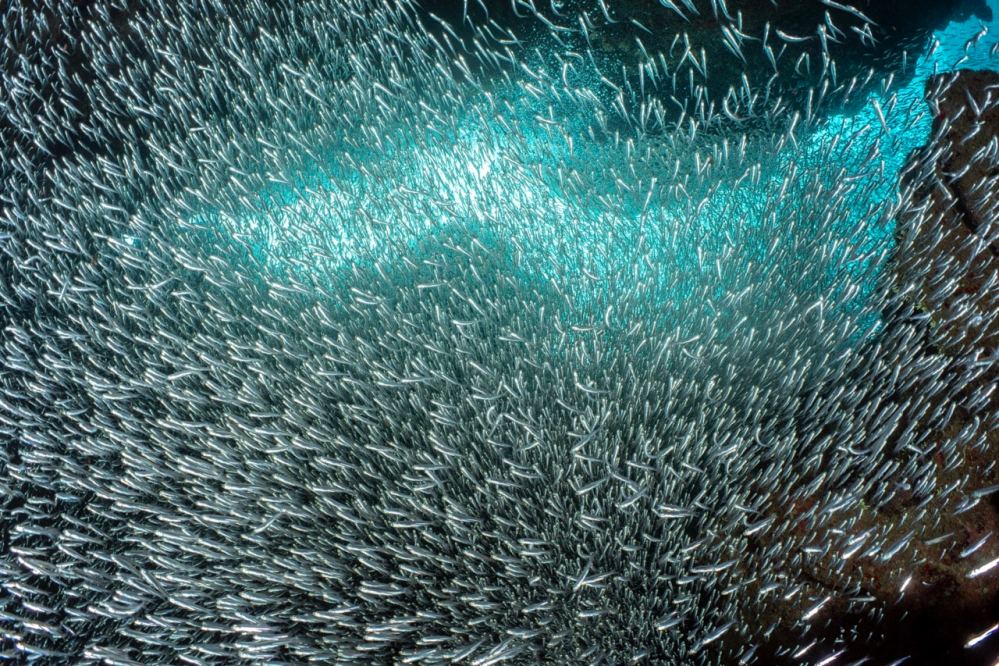
A HYPNOTIC BALL of thousands of glistening silversides pulses and swirls at the entrance to the dark cavern. Every tail flick sends a rolling wave through the shimmering mass. In perfect synchrony, like a murmuration of starlings, the fish fold and reshape themselves, blocking my path. My dive buddy has already disappeared behind the sparkling curtain, leaving me only one option – to swim straight through this shimmering wall. I’ve never been engulfed by so many fish before. As the school swallows me, I find myself inside one of the most extraordinary underwater spectacles I’ve ever experienced.
It’s moments like this in Spooky Channel that have earned Roatán its reputation as one of the Caribbean’s premier diving destinations. Perched on the southern edge of the Mesoamerican Barrier Reef, the world’s second-largest barrier reef system, Roatán is the largest of Honduras’ Bay Islands. Stretching for 37 miles (60 kilometres) and lying around 36 miles (57 kilometres) off the country’s Caribbean coast, the island forms part of an archipelago.
Roatán itself is an uplifted coral island, rising from an ancient reef to 270 metres (890 feet) above sea level. That geological history has sculpted an underwater landscape of sheer walls, spur-and-groove formations, caverns and coral reefs, many beginning just a short swim from shore.
Home to around 100,000 people, Roatán’s culture is as diverse as its reefs. Indigenous peoples, Garifuna communities, descendants of British settlers and more recent arrivals from mainland Honduras have all helped shape the island’s unique identity. While Spanish is the official language, English is spoken just as readily in many parts of the island, particularly within the tourism and dive industries – a legacy of Roatán’s British colonial past.

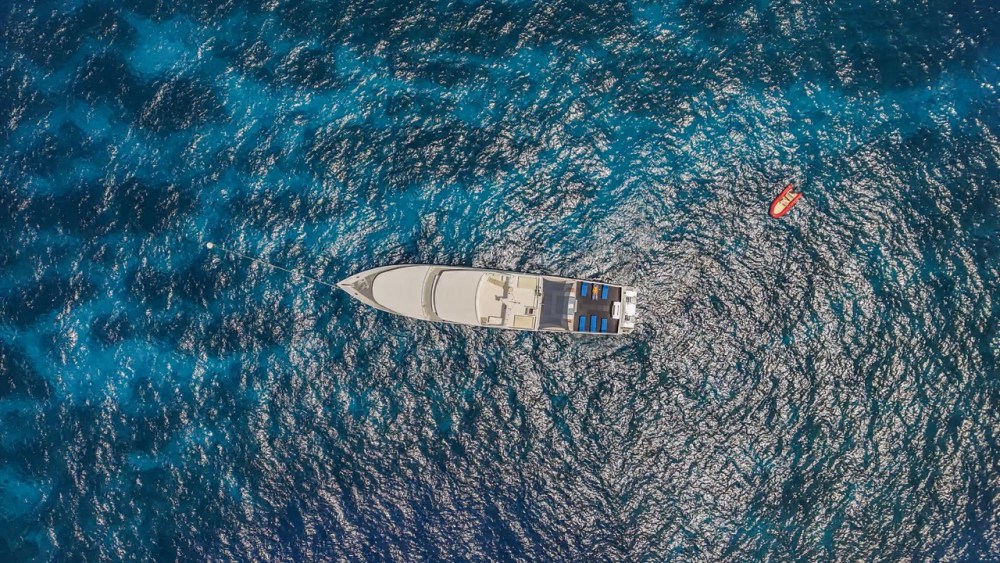



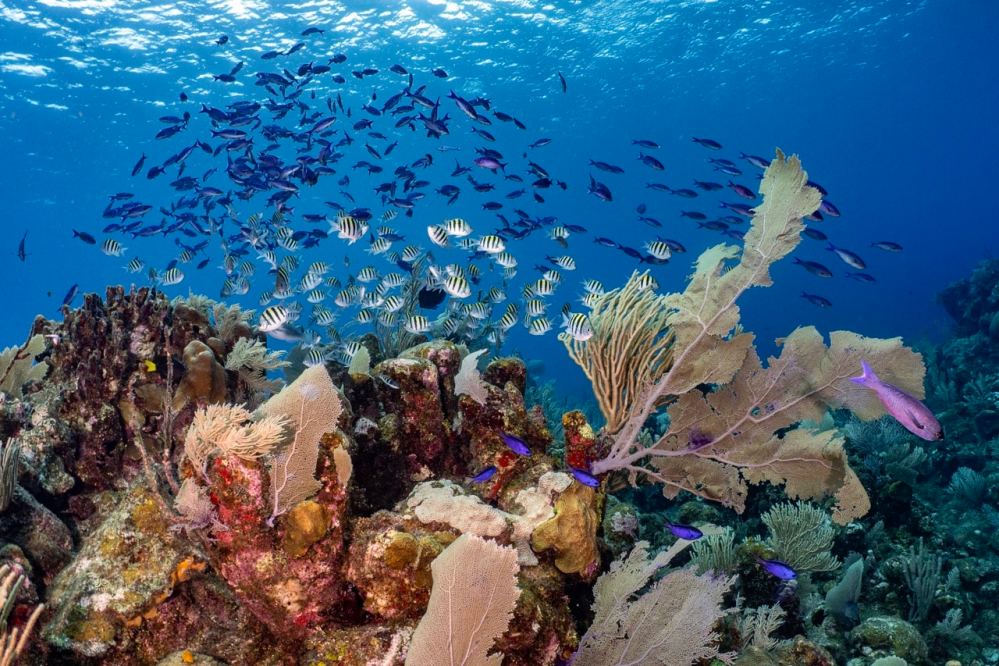

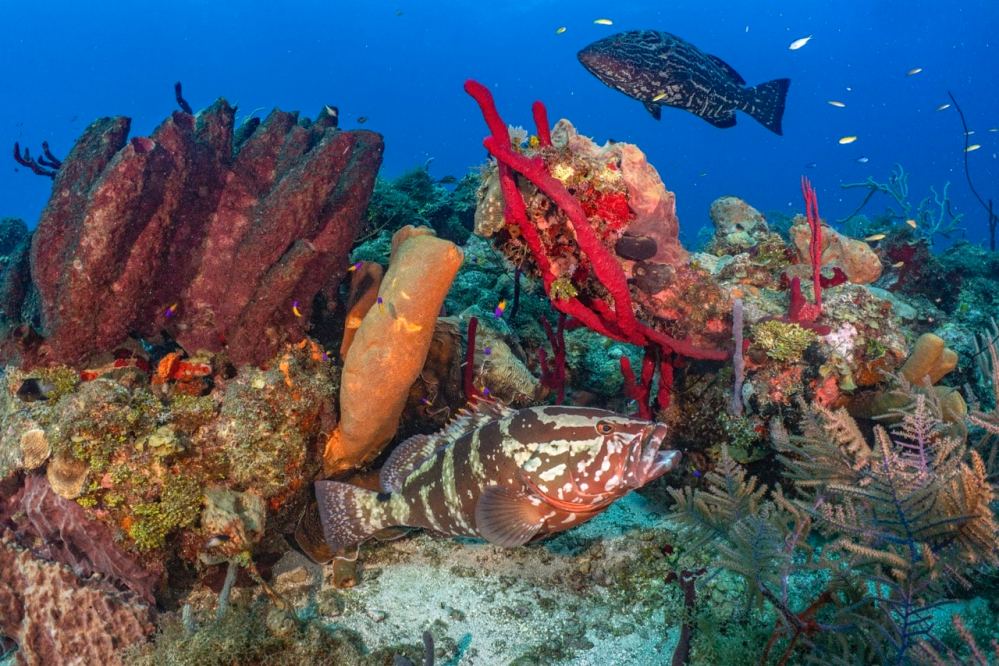
For many divers, the best way to experience Roatán is from a liveaboard, unlocking access to remote reefs and walls beyond the reach of day boats. Favorable conditions allow itineraries to explore both the island’s north and south shores before crossing to the neighboring islands of Utila and the protected marine reserve of Cayos Cochinos.
Six of the eight core crew aboard the 120-foot Roatán Aggressor call the island home. It’s this local knowledge that will guide us through the Bay Islands over the coming week. As the engines rumble into life early on Saturday morning, I spread my camera gear across the spacious camera table and begin assembling my kit.
We start on the island’s south-eastern coastline at a dive site synonymous with Roatán: Mary’s Place. This legendary site is only accessible when the prevailing trade winds ease. I know we’re in for something special when a regular guest pleads to return before we’ve even hit the water.
Dropping into the warm Caribbean blue, the reef below suddenly splits apart to reveal a dramatic volcanic crevice slicing through the seabed like a giant scar. Entering the fissure, towering walls rise sharply on either side. Overhead, shafts of sunlight pierce the narrow opening, illuminating giant barrel sponges, sea fans, and hard corals clinging to the rock.
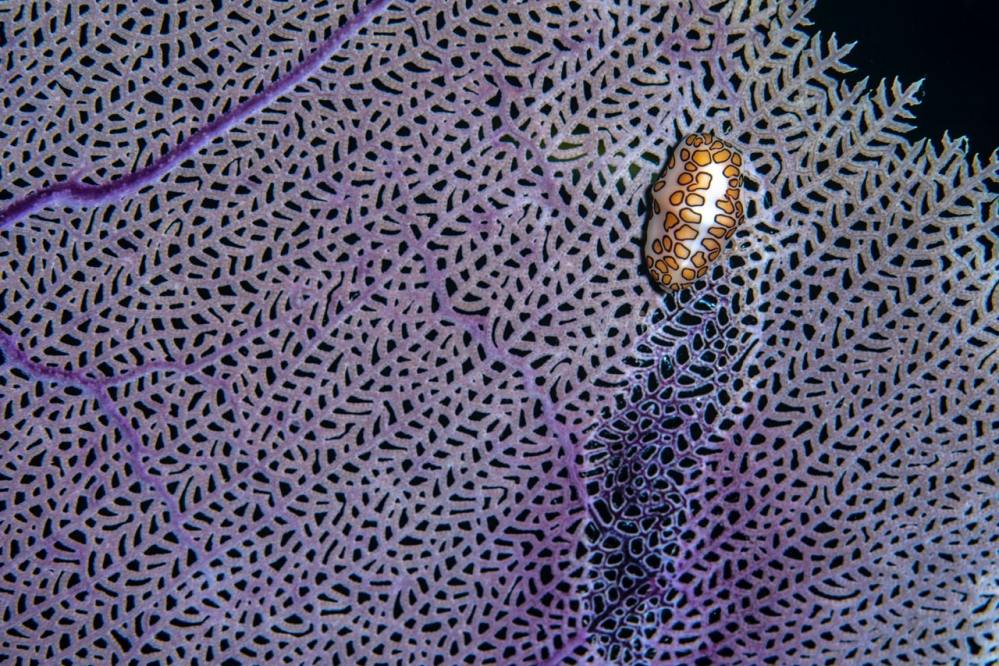
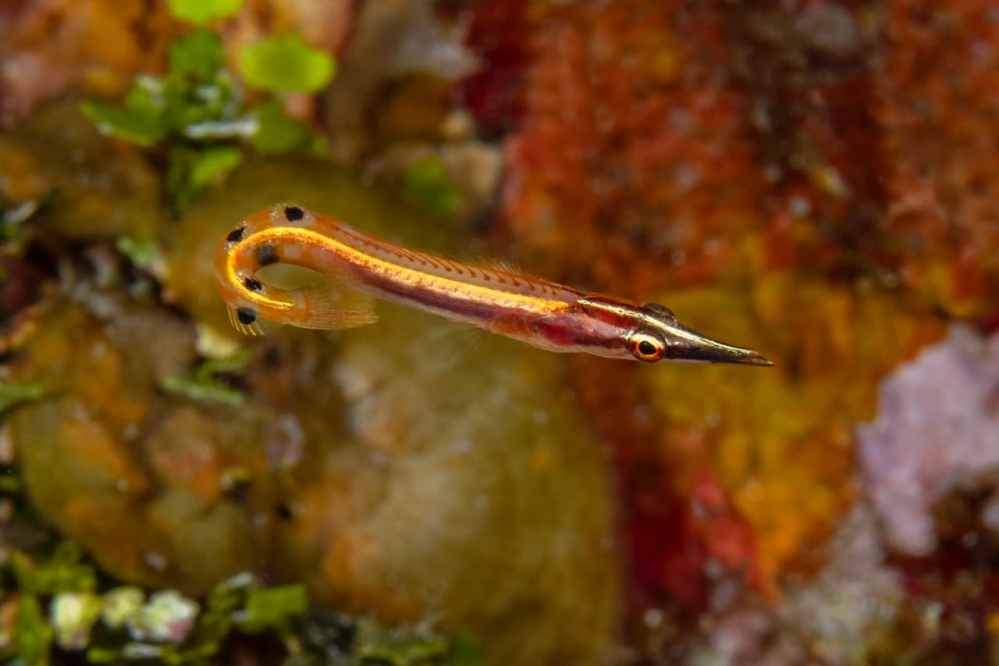
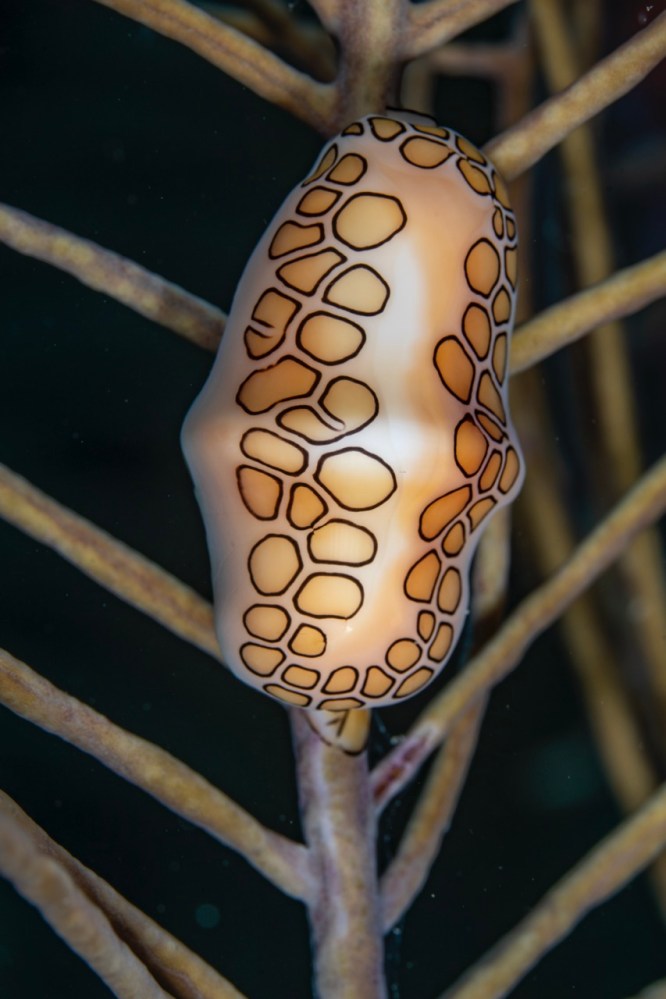
The distant reaching beams tempt me to hurry through the channel. However, my Dive Master, Alan Roberts, has other ideas. Wisely, he slows the pace to a gentle fin-kick, allowing me to fully appreciate the ride and find more hidden rewards. Tucked within the cracks are orange-striped arrow crabs, camouflaged slender filefish and mottled flamingo tongue snails inching across soft corals. After thirty minutes of winding channels, we pop out onto a deep drop-off wall that plummets to dark depths. With our diminishing air, the only sensible path is up to a plateau where a free-swimming green moray eel surprises us with its pace. I spend my surface interval attempting to herd a group of schoolmaster snapper into a photogenic shape.
Paid Advertisement
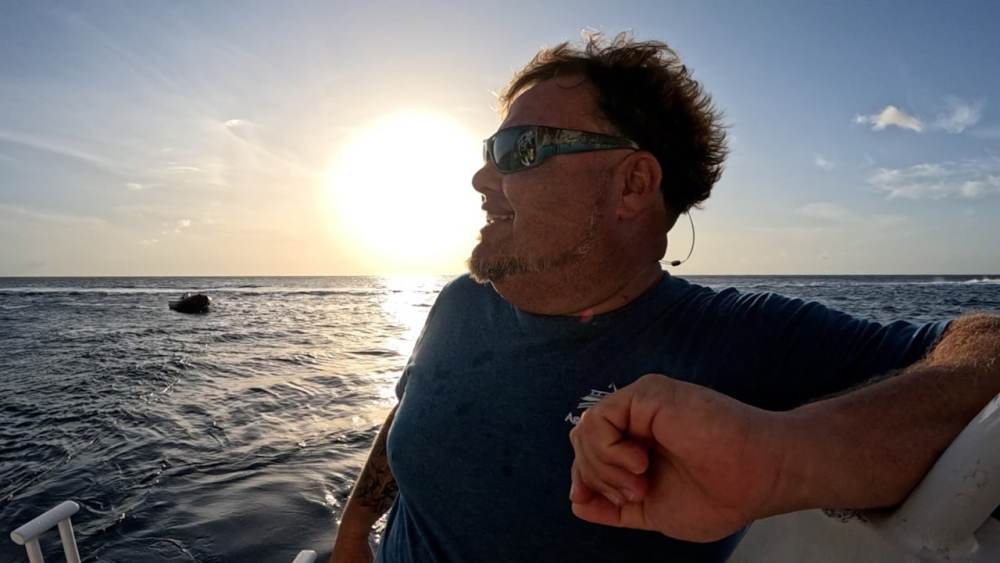
That evening, I’m enjoying the golden glow of dusk and devouring a BBQ of sumptuous ‘island-style’ ribs made by supremo chef Jana Waterhouse on the upper deck. Tucking in a little too eagerly, I am licking sauce from my fingers as I start to grill Alan about his own journey here. His story has more depth than the drop-off I’ve just encountered. In 1984 he met Wayne and Anne Hasson, the original co-owners of the Aggressor Fleet, and he was encouraged to get his captain’s license on the inaugural Aggressor charter. He began moving their boats around the Caribbean. He beams like the sun as he describes how he lived the dream – traveling the world, devising new dive locations, kitting out boats, strategizing catering logistics and hiring crew.
After decades of running other people’s boats, the opportunity arose in 2016 for Alan to buy his own and operate it as an Aggressor franchise. I ask if he was nervous starting this new venture. He laughs, “No! I knew I could do it! I’d been doing it for 20 years and I was coming up to retirement. If I was ever to be the boss of my own show, this was the time. So I said, let’s go – one last show!” Alan had always loved the Bay Islands and Roatán felt like the ‘old Caribbean’ so he was excited about the location. He describes how back then you could walk down an empty beach and grab a beer for a one-dollar bill and a hotel room for $29. He saw a sleepy Caribbean island with enormous potential. Nearly a decade on, he has watched Roatán transform into a thriving dive destination, while somehow retaining the laid-back charm that first drew him here.

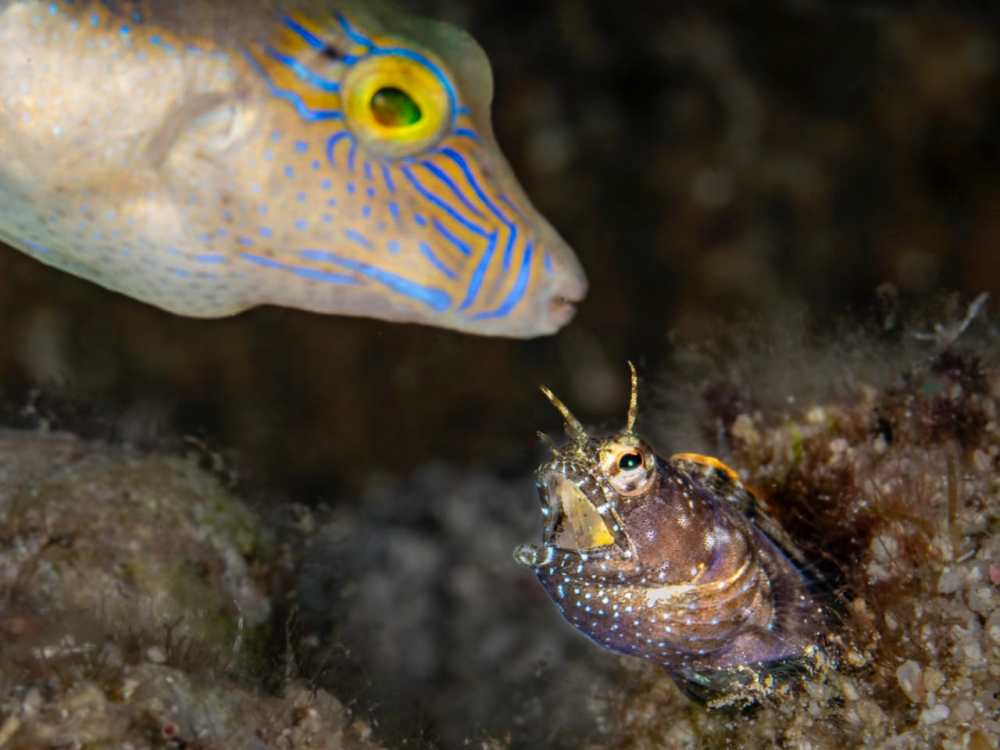





Our conversation is cut short when Alan reminds me the night dive is in an hour! I realize I still need to change my lens over to macro, so I scurry downstairs and begin reassembling my camera on the large, designated table. Most dive boats around the world schedule night dives at dusk, you enter the water in the fading glow of daylight and surface to a hot dinner waiting on board. Not on the Roatán Aggressor. Here, a night dive is precisely that. Having already eaten, it’s time to pull your wetsuit back on, power up your torch beneath a sky full of stars and step into the black water.
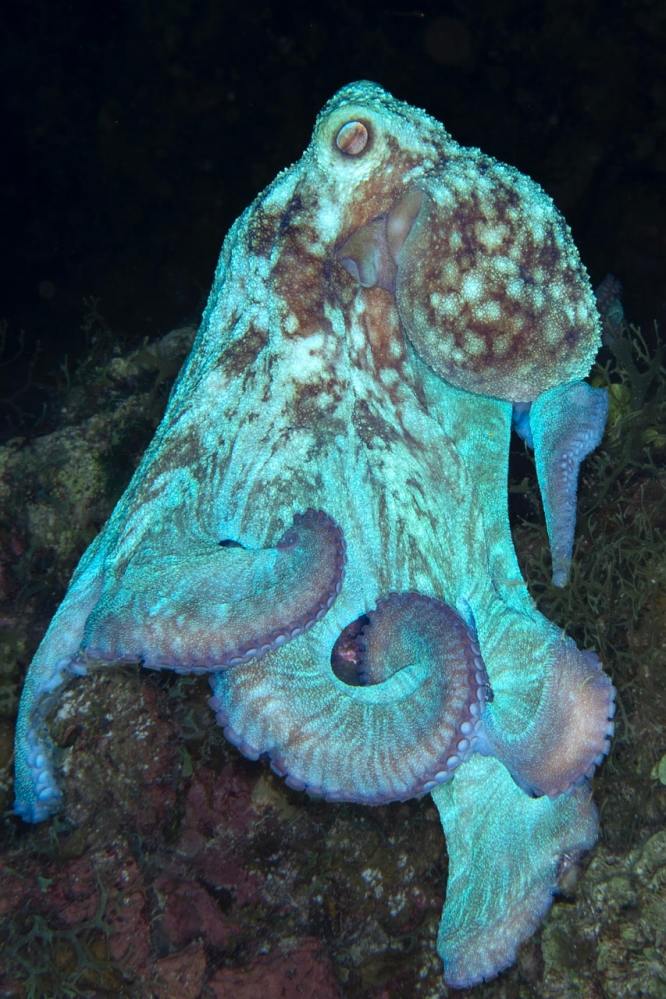
Diving at this late hour means all the nocturnal animals are already fully up, awake and hunting around the reef. If you’re lucky you’ll be diving with Dive Master German Granuel, the octopus whisperer, who, on one dive, found ten Caribbean reef octopus in 45 minutes. Whilst diving the site Taviana’s Wall, our group chanced upon a special individual, flashing tones of iridescent purple, white and teal.
Paid Advertisement
Disaster! A bright flash of a torch hits the octopus’ eye and we watch as the frightened critter disappears into a crevice like liquid pouring into a crack. Even with a 60 cm long body, a lack of rigid skeleton allows the octopus to fit through the tiniest of gaps. If its 1cm parrot-like beak can fit through a nook, the rest of the animal can follow.
Luckily my team is experienced, between us we work the situation. My buddy Alexis Kyman leaves her torch on and everyone else hides their beams. We wait patiently. In this low light our octopus regains her confidence, gingerly poking her head back out the reef before emerging in all her glory. For half an hour we stay with our new friend as she hunts, poking her long suckered arm into reef crevices, pushing out panicking crabs then trapping them under her flashing body whilst shaped as an ‘umbrella of death’. Octopus skin contains pigmented cells known as chromatophores which allow the animal to change color within milliseconds. This glowing effect is most visible when their pigment sacs are retracted, allowing underlying structures, called iridophores, to reflect light. After this display of mesmerizing behavior, our bubbling excitement spills onto deck whilst we sip our hot chocolate (and rum) delivered by steward Karen Lopez, some make it to the hot tub, a perfect full stop before bed.
As you’re pottering around the boat, perhaps relocating from the toasty hot tub to grab snacks in the saloon, you’re likely to hear the loud, comforting chuckle of Captain Eddy Anderson. Eddy first encountered marine life at nine years old when his sister ‘made the mistake of lending him her snorkeling gear’ from that point on, they couldn’t keep him out of the water. He went for his first dive within the year, from his local Roatán beach, Sandy Bay. Back then he remembers ‘countless lobster and snapper meters from the shore’. Now he has 32 years of working for the Aggressor under his belt, and you’ll still struggle to keep him from the water.
Paid Advertisement
Eddy’s personal dedication to customers began 25 years ago when he came up with the trademarked ‘Fintastic service’, a service that began on the Roatán Aggressor IV. Here, at the end of every dive, when you reach the ladder of the mothership, you will be greeted by a staff member in the water who will gently remove your fins for you and pass them to the deckhand, allowing you to climb the ladder with ease. This service is welcomed by all divers; however, it is particularly helpful for those of us who have creaky knee joints.
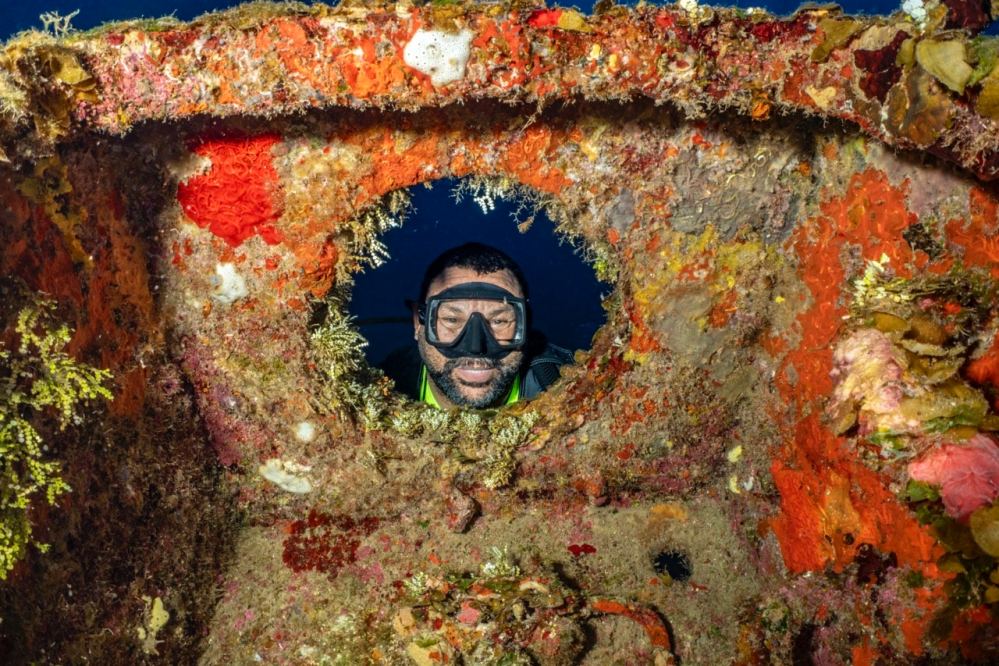
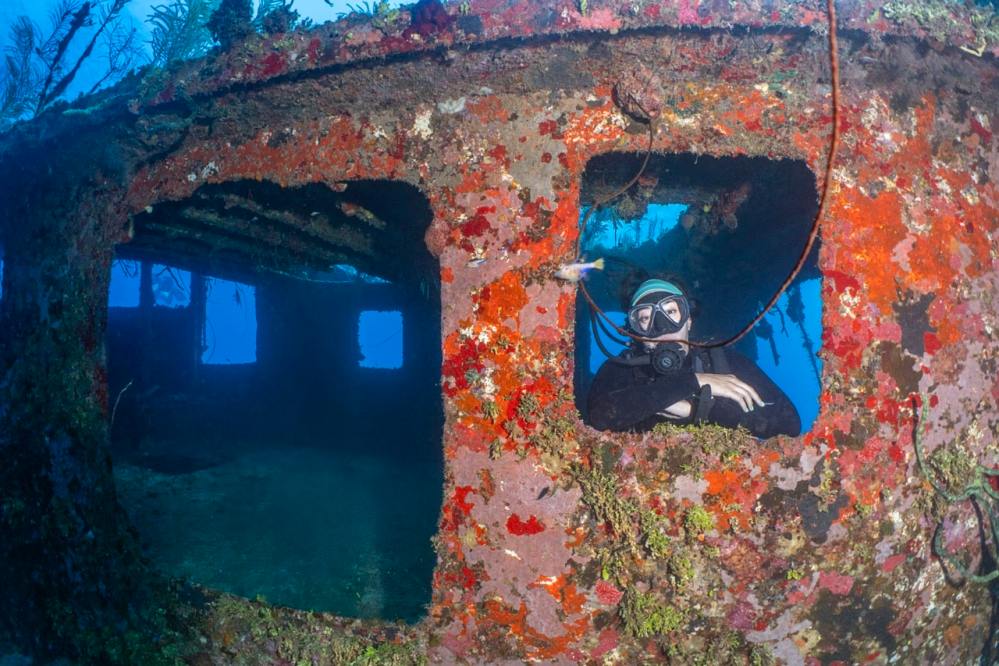
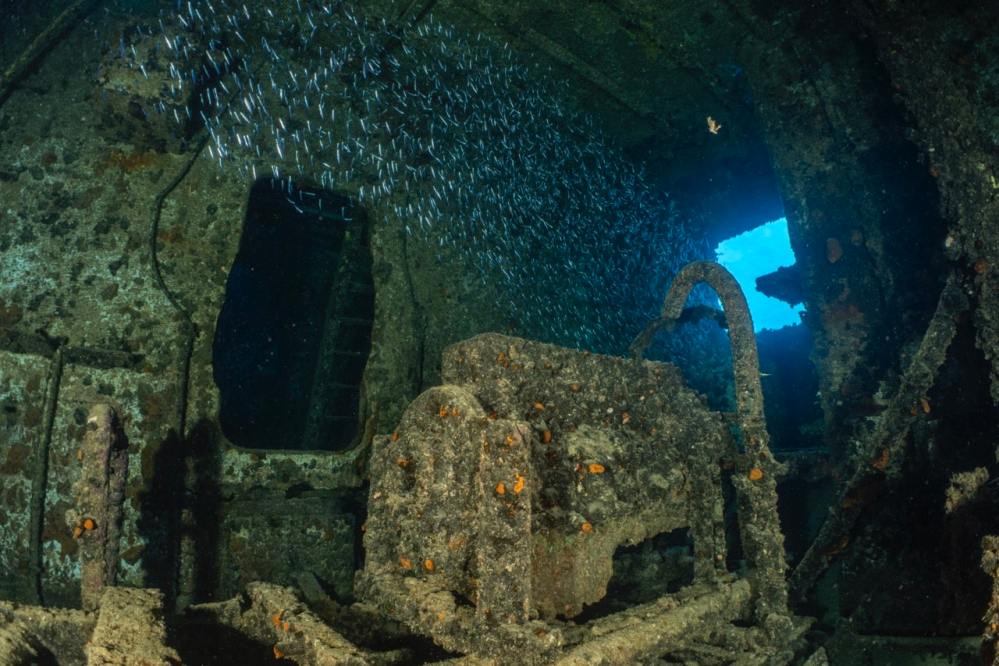
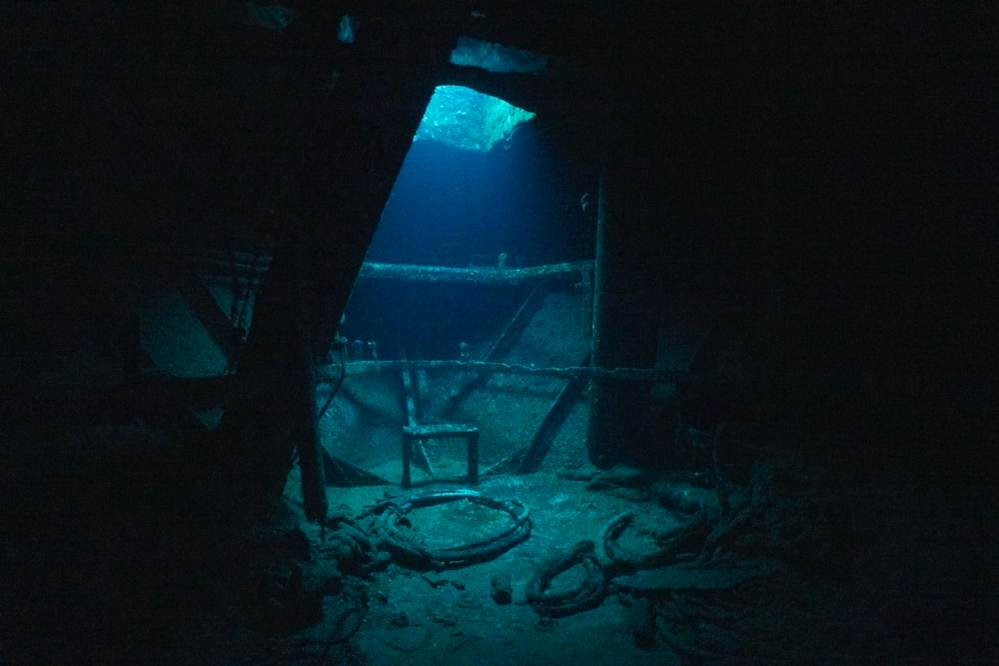
Eddy’s astute observations continue, recognizing my passion for photography (and selfies) Eddy shares a gem of information about the upcoming wreck dive – ‘trust me, you’re going to love this’ he chuckles. El Aguila (The Eagle) was originally a 230-foot ship built in Germany, used to transport cargo around the Caribbean. In 1990, whilst transporting concrete, it encountered terminal difficulties off the coast of Utila in the Bay Islands. It sank, but Rocky Jones successfully salvaged the ship and brought it into the harbor. Not long after a storm dragged it back onto the reef. It was salvaged a second time and partially submerged to prevent further storm damage.
In 1997 El Aguila was purchased by Anthony’s Key Resort to be sunk as a new wreck site on the North side of Roatán. It took the team 5 weeks to purchase, clean, tow, and finally lay the ship in its current location. Then, finally, in 1998, Hurricane Mitch broke the sunken vessel into three separate pieces. This vessel has been through the wars! And Eddy’s tip? If you swim to the middle section, there’s a jutting piece of metal that has a porthole that is perfectly positioned to line up a cheeky face peering through for a photo. Eddy and I take turns posing through the coral encrusted hole. His underwater chuckle is the best one!
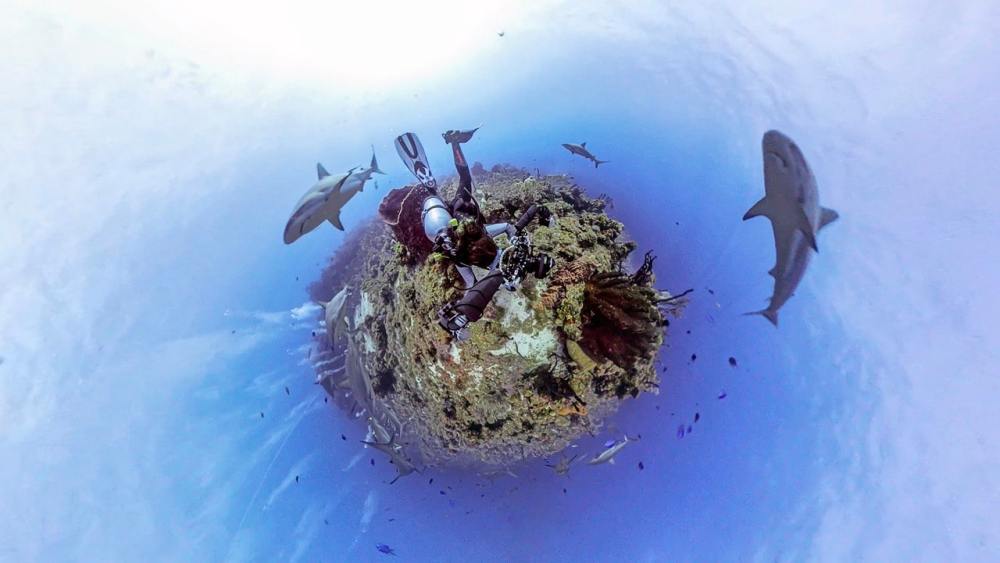
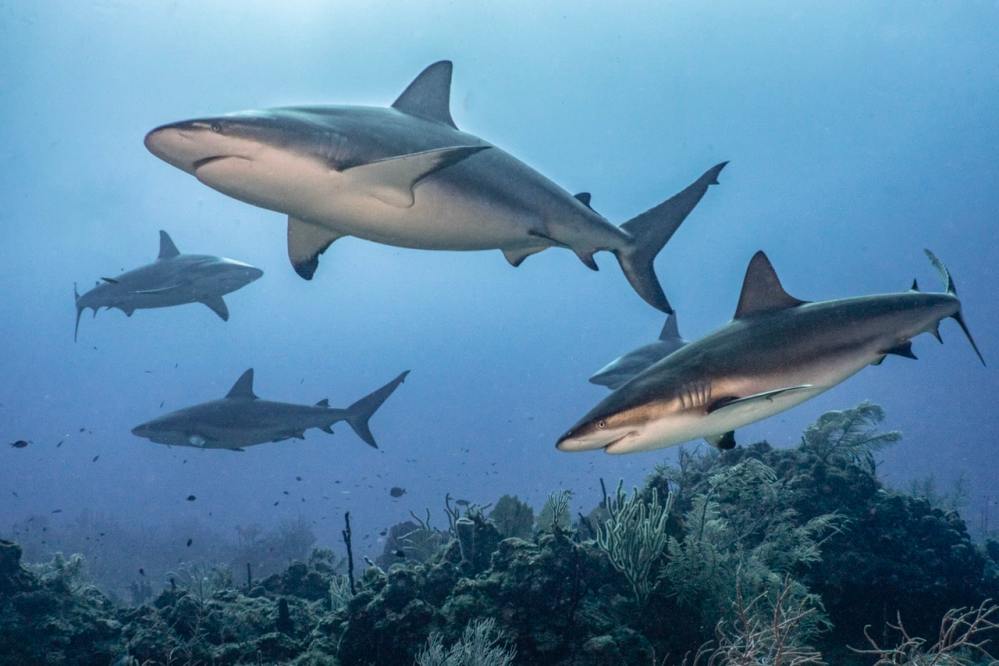
Heavy metal is fun, but I’m all about the animals. My standout, heart-rate-rising dive was the dynamic theatrical show at Cara a Cara. Once settled on the sandy bed in a coral encrusted garden, 14 Caribbean Reef Sharks encircle us, gathering like trained puppies. Beside me, my Dive Master Willie Waterhouse grunts loudly whilst gesturing to a specific shark. (Turns out he’s brother to Jana, the master chef – this crew really is a family affair!) On its underside a pair of external appendages called claspers indicated a male – a rare sighting in this toothy school. After twenty minutes of close passes, these 7-foot sharks disperse and our adrenaline begins to stabilize. A quick search of the sandy arena (aided by Willie) results in finding a shark tooth! It is gifted to the guest celebrating her 100th dive – what a memento of the occasion!
Paid Advertisement
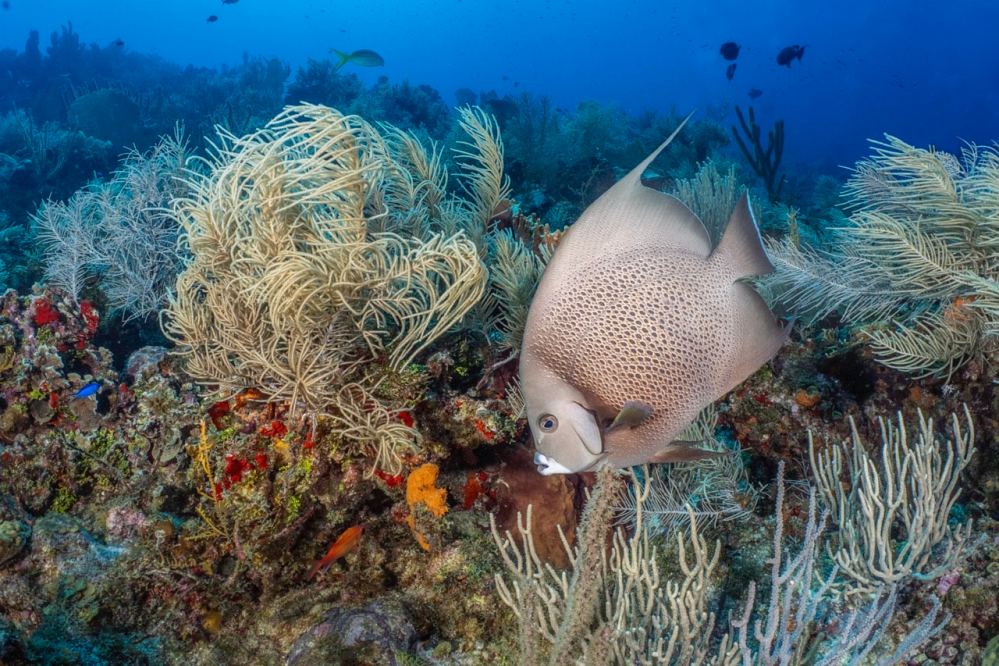
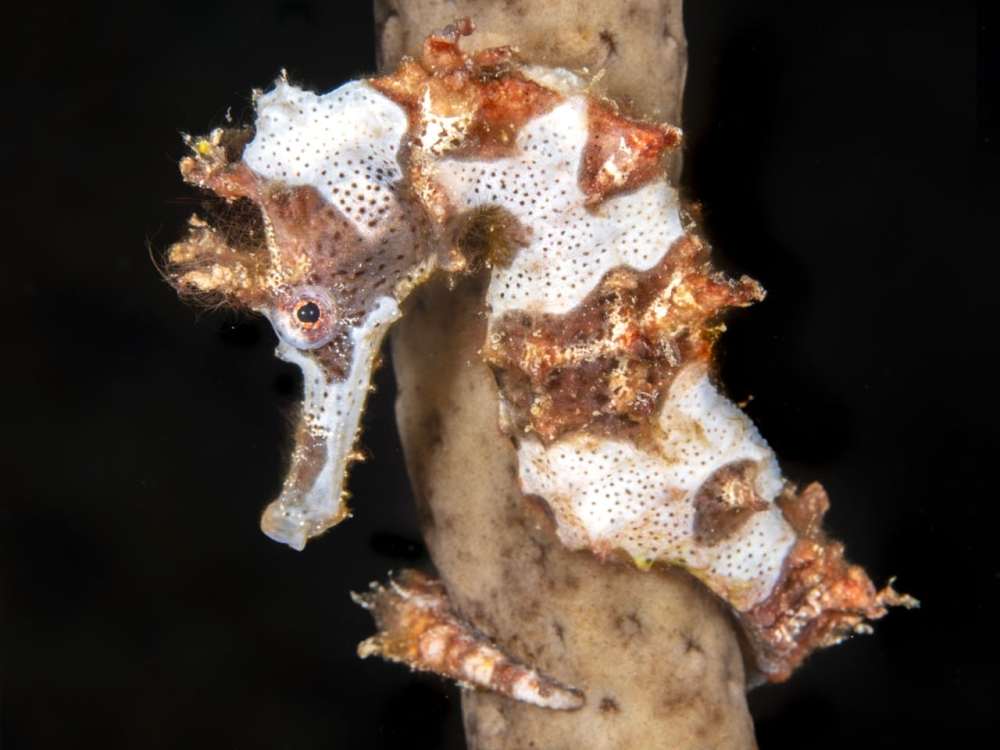
After a two-hour crossing to the untouched reefs of Cayos Cochinos we explore Coco Grande where munching gray angelfish and camouflaged trumpetfish are found in the vast fields of healthy coral. After a long lunch and 3 hours of sailing, Utila gives us four more sites with undulating topography to explore. At Pinnacle, on the last dive, I took the risk of a macro lens, willfully ignoring the stunning wide-angle scenery around me. Luckily the plan paid off when I captured a picture of an exceptionally pretty white seahorse.
By moving between Roatán, Utila and Cayos Cochinos, the Roatán Aggressor reveals far more than just a collection of dive sites. Each island has its own underwater personality, from labyrinthine crevices and coral gardens to historic wrecks and shark encounters. Yet when I think back on the week, it isn’t the walls, the wrecks or even the sharks that first come to mind. It’s that shimmering curtain of silversides at Spooky Channel – a moment when I stopped feeling like a visitor and became, if only briefly, part of the living reef.





Facts
The Roatan Aggressor sleeps 18 guests and includes a master stateroom with a queen bed and eight deluxe staterooms that have one double and one single berth. All rooms have climate controls, private bathrooms and showers. She has an air-conditioned salon and dining area, sun deck complete with hot tub, lounge and deck chairs, outdoor sound system, shaded cocktail deck and grill. She is diesel-powered and cruises at 10 knots. A massive plus for me was her very spacious dive deck. Whilst kitting up, I had more elbow room than I could ask for. Starlink is available so Wi-Fi can be purchased on board.
Diving here is easy and relaxing. Most dives I didn’t descend below 25 meters, and we only had two dives with above a gentle current. Visibility is 18 to 30+ meters year-round. Depending on the schedule you’ll have the option of doing between 24 – 27 dives. The warm tropical climate is year-round (averaging 27°C or 80°F). The best time to visit is from February to July when the weather is at its driest. The water temperature was 29 degrees – I wore a 5mm wetsuit but I get cold.
Logistics:
Travelling to Roatan from the USA is straightforward as major airlines fly direct nonstop from the USA to Roatan (RTB) from multiple gateways on Saturday including American Airlines, Delta, and United. Connecting flights through the gateway cities of Miami, Atlanta, Houston and Dallas are also available. Coming from England I flew from Heathrow to Houston (10h20min), then 3h to Roatan. At the time of writing, if you have a British passport you need to buy a £45 visa in advance from the Honduran Embassy in London. I travelled on my Australian passport so didn’t need one.

Click here to read this article on our Flippingbook platform.
More from This Issue:
THIS MONTH’S ADVERTISING PARTNERS










Watch the Interview on Level Up for this issue:
RECENT ISSUES


MAGAZINE TOPICS