Julie is listening to our industry, and ready to help improve both the association and the show.
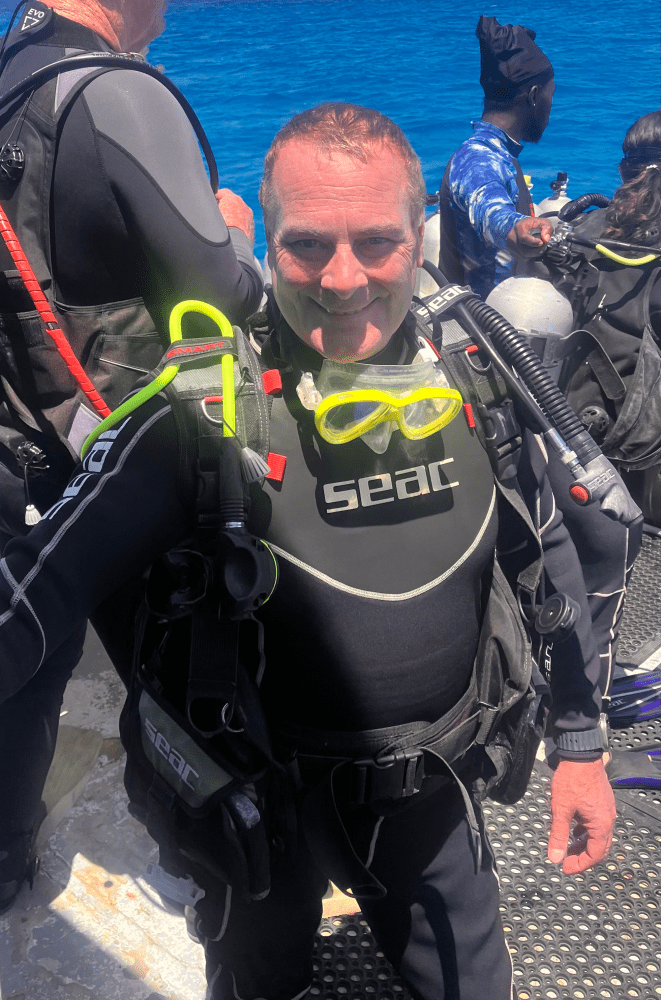
WHEN AN ORGANIZATION welcomes a new chief executive officer, people naturally want to know what will change. In the case of DEMA, those questions carry additional weight because the association represents many different parts of the recreational diving industry. Dive retailers, manufacturers, training agencies, travel providers, resorts and other professionals may share the same industry, but they do not always share the same immediate needs.
Julie Anne Fabsik-Swarts, DEMA’s new CEO, understands that she has much to learn before deciding where the association should go next. Her first priority is listening. “If it isn’t broken, don’t fix it when you first start a new position,” she said during an interview with Scuba Diving Industry Magazine. “I have been spending most of my time on a listening tour and meeting with key stakeholders throughout the industry.” That includes conversations with industry leaders as well as working dive professionals and recreational divers.
“I always make a career of knowing what I know and knowing what I don’t know,” she said. “I’m talking with people and learning their thoughts, passions and concerns. I’m really trying to understand where DEMA is and absorb as much as I can.”
That is a sensible place to begin. Our industry is made up largely of small businesses, and the challenges facing a dive retailer may be very different from those affecting a manufacturer, resort or training organization. Before DEMA can decide where to put its resources, its leadership must understand what members are experiencing.
A Diver Leading a Diving Association: Fabsik-Swarts comes to DEMA with an extensive background in association management, education and sports. More importantly for many DEMA members, she is also an experienced diver. “My husband and I have more than 1,500 dives each,” she said. “We received our first certifications in 1998, so we have been diving for about 28 years. We love to dive.”
Her professional career has moved between the sports world, nonprofit organizations, higher education and association leadership. She previously led the U.S. Olympic synchronized swimming team and the National Intercollegiate Soccer Officials Association. She also has a lifelong connection to gymnastics. She competed as a gymnast, coached while attending college and is beginning her 45th year as a USA Gymnastics and NCAA women’s gymnastics judge.
Most recently, Fabsik-Swarts served as CEO of the International Employee Assistance Professionals Association. That position gave her considerable experience working internationally and expanding an association into new markets. She helped grow the organization’s presence in countries including South Korea, Nigeria and Botswana. She also traveled and spoke internationally, experience that should be useful for an association serving a global industry.
The opportunity to lead DEMA appeared unexpectedly. Fabsik-Swarts was helping her husband look for a position through an association job site when she saw DEMA’s listing. “I was really happy with what I was doing, but this was diving,” she said. “It was like a sign from above. Whatever your passion is, whether you call it faith, karma or divine guidance, I submitted a résumé.”
She interviewed shortly before leaving on an overseas trip. When she returned, DEMA offered her the position. “I just could not say no,” she said. “I am excited to be here and help develop and shape the direction of one of my passions.”
Paid Advertisement
Challenges Facing Dive Businesses: Fabsik-Swarts assumes leadership at a complicated time. Dive businesses continue to face higher fuel expenses, increased insurance costs, tariffs and pressure on the prices of imported products. “The industry is getting squeezed on all sides right now,” she said.
Those pressures affect companies differently. Boat operators feel fuel costs immediately. Retailers must manage higher equipment costs while remaining competitive with online sellers. Resorts and travel providers must account for transportation, labor and insurance expenses while keeping packages affordable.
DEMA cannot eliminate these challenges, but a trade association can collect reliable information, advocate for the industry, connect members with resources and bring businesses together to work on shared problems. “Understanding where we are and how we can help as a trade association can really make a difference,” Fabsik-Swarts said.
Research is one example of that value. As chair of DEMA’s Research Committee, I have seen how difficult it can be for an individual dive retailer to gather dependable information about participation, customers and industry trends. DEMA members have access to research that would be difficult and expensive for most individual businesses to obtain independently. The question facing the association is how to communicate those benefits more effectively and create additional reasons for professionals to remain engaged throughout the year.
More Than the DEMA Show
For many dive professionals, the word DEMA means the annual trade show rather than the association behind it. Fabsik-Swarts wants to change that perception. “Some people say, ‘I only become a member when I’m going to the show,’” she said. “We want to make DEMA a place where, when you get that renewal notice, you say, ‘I have to renew because I don’t want to miss something.’”
Building year-round value will require more than adding occasional member benefits. DEMA must help members operate stronger businesses and help individual professionals develop their careers. “We want DEMA to be there for professionals on a year-round basis,” she said. “We want to help grow businesses, support professional development and help people pursue their aspirations as dive professionals.”
She also wants people working in diving to be recognized for the knowledge and experience their careers require. “We want to make sure dive professionals are valued and treated as professionals,” she said. “No matter what aspect of the industry you are in, we want DEMA to be an association you feel strongly that you have to be part of and that you are missing something if you are not.”
That is an ambitious goal, and Fabsik-Swarts acknowledges that it will take time. “We have a long way to go,” she said. “We are going to be doing a lot of strategizing and work in that area.”
Celebrating 50 Years in New Orleans: While the longer-term strategy develops, Fabsik-Swarts is also preparing for DEMA Show 2026 in New Orleans. She arrived shortly before the Show, leaving little time to make major changes to an event already well into production. Her approach has been to learn the existing operation, meet members and help deliver a successful Show.
Paid Advertisement
This year also marks DEMA’s 50th anniversary. The association is planning a Thursday evening celebration, and Fabsik-Swarts said more than 500 tickets have already been sold at the time of our interview. Attendance is limited, so members planning to participate should make their arrangements early. Fabsik-Swarts will formally meet members during the Wednesday member breakfast. The event will also include association updates and industry awards.
The Show remains important because it places many different parts of the industry in the same building. Retailers come to see products, meet vendors, evaluate destinations and attend educational sessions. However, some of the most valuable conversations happen outside scheduled appointments. “It is an opportunity to connect on a real personal level,” she said. “Whether you are a hugger, a handshaker or someone who wants to share a cup of coffee or a beer after the Show, you get to connect.”
Fabsik-Swarts remembers hearing dive shop owners talk about DEMA when she was a new diver, long before she understood what the organization or Show represented. “DEMA has been a staple in the diving community,” she said. “It is not only education and deals. It is an opportunity to meet your colleagues, meet leaders in the industry and talk with them one-on-one.”
Those relationships matter. Diving remains an industry in which much of the business is built through trust, personal contact and years of working together. Technology makes communication easier, but it does not fully replace a conversation across a booth, during breakfast or after the Show floor closes.
Creating the Next Strategic Plan: Fabsik-Swarts will help lead DEMA into a new strategic planning process. That work will require the association to decide which issues deserve the greatest investment. “We are going to envision where we are, determine the most important things we should be doing, and decide where we put our time, energy and money,” she said.
Paid Advertisement
Members should have a voice in those decisions. DEMA provides opportunities to serve on committees, vote in board elections, participate in research and communicate directly with association leadership. If you are already a member, get involved. Attend the member breakfast, volunteer for a committee and take advantage of the research and educational resources available to you. If you are not a member, visit DEMA.org and examine what the association offers.
Fabsik-Swarts believes DEMA’s ultimate role is to help create conditions in which more dive businesses and professionals can succeed. “If you are interested in moving the needle in your organization and trying to grow and expand, we want to help you,” she said. “We want to help you learn how to market and reach the community where your shop or business is located.”
Her vision connects business growth with expanding participation in diving. “The more divers we have, the happier shop owners are, the more trips people take and the more equipment they buy,” she said. “We all win when that happens.”
A Personal Connection to Diving: Near the end of our conversation, I asked Fabsik-Swarts about her favorite dive memory. She said they had been to many destinations, but one experience stood out. She recalled a dive at Richelieu Rock in Thailand when a large male cuttlefish reached toward her husband as though trying to understand who or what he was. “There was a little communication with the natural world, and that was cool,” she said. “You cannot get that any other way.”
Paid Advertisement
She also described diving as the closest she expects to come to being an astronaut. Divers must remain aware of their safety and equipment while entering a place few people experience directly. “You get to see new things, and you make some of the best friends you will have for life,” she said. “It is a wonderful community, and I feel blessed to be part of it.”
That combination of professional association experience and a personal love of diving gives Fabsik-Swarts an opportunity to see DEMA from more than one perspective. She understands associations, but she also understands why people become divers and why so many choose to build their careers around the water.
Her first task is to listen. What comes next will depend in part on what DEMA’s members tell her and how willing they are to participate in shaping the association’s future.

Click here to read this article on our Flippingbook platform.
More from This Issue:
THIS MONTH’S ADVERTISING PARTNERS