

– by Beto Barbosa, Manager Diver’s Den, Cairns, Australia

Every year at the DEMA Show, dive professionals gather to share ideas and innovations. We talk about new gear, teaching methods, and how to grow the industry. But one topic that often gets overlooked is what it’s like to run a large-scale dive operation — not just a small shop or liveaboard, but a corporation with multiple stores, big vessels, and more than 200 staff.
Running a dive business at this level is a whole different ball game. It’s more about leadership, logistics, regulations, and making sure hundreds of moving parts and employees work together seamlessly.
Staffing in Cairns: A Different World
One of the biggest challenges is staffing. Coordinating shifts for hundreds of dive professionals across different locations is tough enough. But in Cairns, the challenge is even bigger.
This isn’t a typical tropical dive destination where a guide takes a handful of divers out in calm waters. The conditions here are rougher, which means boats need to be big — often carrying 40–80 guests, with some operators hosting up to 300 at a time. For new staff, that scale can feel overwhelming. It’s not the environment most guides trained for. Gone are the 8-12 pax on a boat and the personal connections, our crew have to find those connections under immense organisational pressure – making Cairns not the working environment for all pros.


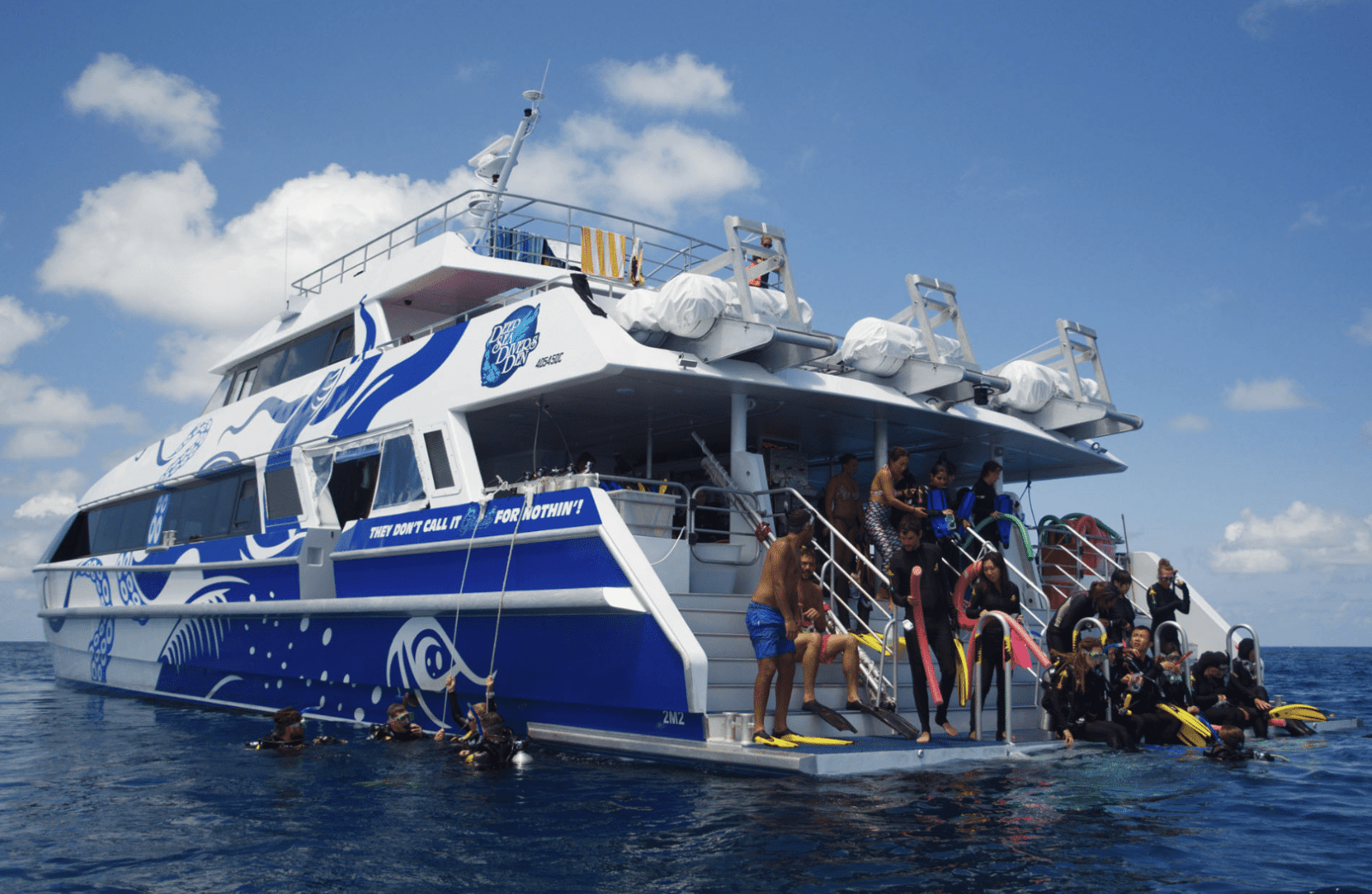


That said, the Cairns experience builds some of the best dive pros in the world. Those who thrive here learn to manage large groups, handle challenging conditions, and deliver safe, memorable experiences under pressure. It’s demanding, but it shapes true leaders in the industry. Our role is to help new staff transition into this unique environment so they can succeed and grow. There’s also something magical about the Great Barrier Reef which makes the effort worth it.
Strict Rules and Regulations
One of the biggest challenges we face in Queensland is operating under some of the strictest dive and snorkel regulations in the world. The Queensland Government’s Code of Practice sets the bar extremely high for safety. Every single trip must comply with detailed requirements — from crew-to-passenger ratios and medical screening, to pre-dive and pre-snorkel interviews, mandatory SMB use, annual professional dive medicals, and annual staff inductions on all activities conducted. These systems are essential, but they also make diving here both costly and training-intensive.
On top of that, we work within the Great Barrier Reef Marine Park, managed by GBRMPA. Their rules cover everything from anchoring and waste management to the language used in dive briefings. As a Green Fins member, 100% AWARE partner, and a PADI Eco Centre, we take these standards seriously — not only because we believe in them, but also because the penalties for breaking GBRMPA regulations are significant.
These protections are vital for safeguarding the Reef, but they demand constant oversight, layers of paperwork, and ongoing staff training. For a large-scale operator, ensuring compliance across multiple vessels and hundreds of employees is an enormous and continuous challenge.
Operations at Scale
Of course, it’s not just people and regulations. Running multiple retail outlets means managing inventory, tracking gear across stores, and keeping dozens of compressors and hundreds of regulators in top condition. At this scale, even small inefficiencies can snowball into major costs. Good systems and good people are essential – each with a departmental lead.
Culture and Customer Experience
With so many staff spread across multiple sites, culture matters. Dive professionals are independent by nature — they love the ocean, adventure, and freedom. Balancing that with corporate structure takes constant communication and strong leadership. If we get it right, our teams feel supported and connected to a shared mission. And that directly impacts the customer experience, which ultimately makes or breaks us.


Our Responsibility to the Ocean
There’s also the bigger picture: our responsibility to the environment. Large operations can have a big footprint, so we need to make sure we’re part of the solution. The best way to do this at scale is by embedding sustainability into everything we do — from reducing waste on vessels, having a strong recycling program, solar powered dive store, heated pool, to mostly trying to educate divers through PADI AWARE specialty courses.
Every course taught not only empowers divers to protect the ocean, but also contributes financially to global conservation efforts. When you multiply that across hundreds of instructors and thousands of students each year, the impact is enormous. For us, environmental action isn’t an add-on — it’s central to who we are and what we do.
The Value of DEMA
This is why the DEMA Show is so valuable. It’s not just about shiny new gear; it’s about conversations with other operators who face the same challenges, learning from their systems, and finding solutions we can apply back home. It’s where big-picture ideas meet practical tools.
Looking Ahead
Running a dive corporation with 200+ staff and multiple stores is demanding, no doubt. But it’s also rewarding. We’re not only introducing thousands of people to the underwater world every year — we’re shaping dive professionals, driving sustainability, and helping lead the future of our industry.
Charlotte, our resident Platinum PADI Course Director, shared:
“It’s wonderful watching staff come through our Divemaster Internship starting at Rescue level, progressing through the PADI programs and IDC, and eventually reaching IDC Staff Instructor levels. To then see them supervising, managing boats, and leading teams — the growth is both inspiring and motivational to witness.”
At the end of the day, it’s not just about running boats or filling tanks. It’s about people, the planet, and the passion that brought us all into diving in the first place.
See Beto and Charlotte’s interview on Level Up: From Behind The Counter here!
