

William Reviews What Has Changed in Five Decades of Retailing – And What Has Not
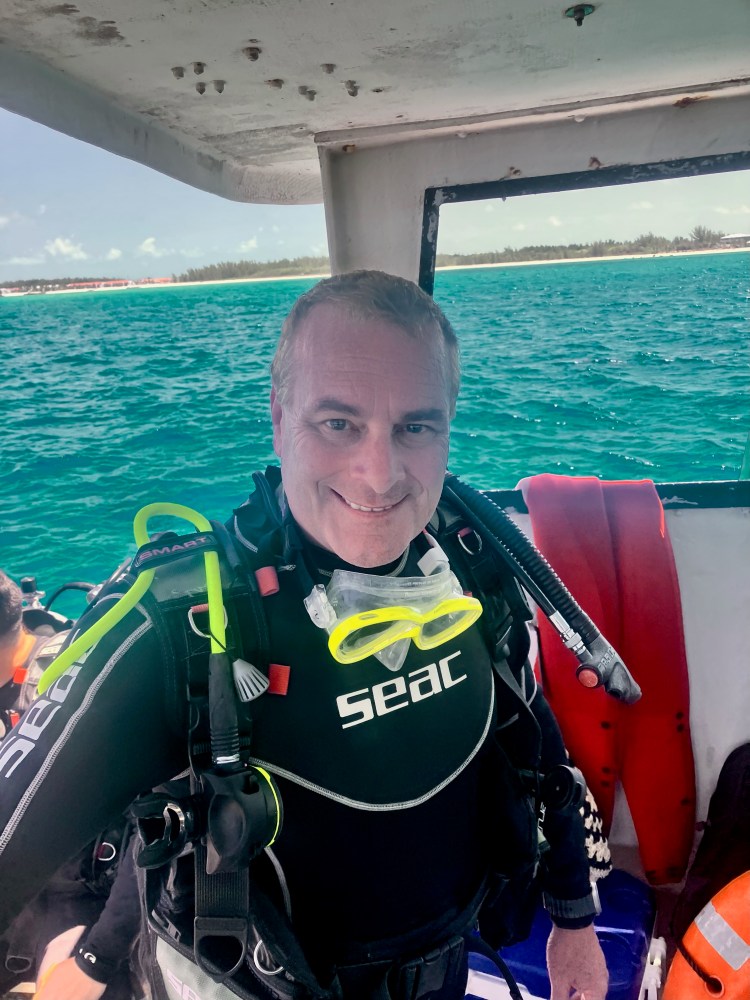
William Cline, Publisher, Scuba Diving Industry Magazine and President, Cline Group
WHAT CHANGED? 1976 – 2026. What Didn’t? And why the dive shop still matters? In 1976, I walked into a dive shop for the first time with my father. It was the long-gone Aqua Lung Center in Fullerton, CA that smelled of neoprene and salt. Regulators hung like trophies behind glass. Dive flags lined the walls. A handwritten flyer advertised a weekend trip to Catalina, and the owner, Don Himes, was the manager and the only employee. Don became an older brother, friend, dive buddy, and business mentor. That shop was more than a store – it was a clubhouse, a travel agency, and a classroom rolled into one. Divers just hung out on a Friday night, telling stories, and someone would ultimately bring a pizza, while jokes and stories were told until the owner kicked us all out and went home.
It’s 2026 now, and while much has changed, the best dive shops still feel that way. The gear is smarter, the marketing is digital, and the travel is global – but at the heart of it all is something that no algorithm or e-commerce platform has managed to replace: human connection.
This is the story of how dive retailing has transformed over the last 50 years – from beach huts and typewriters to TikTok and text-to-chat AI. And why, despite everything, the local dive shop still matters more than ever.
The Analog Era: Dive Shops as Gatekeepers (1976 – 1995)
If you wanted to learn to dive in the late 1970s and 1980s, you went to your local dive store. Period. They were the gatekeepers of the underwater world. There was no online training, no big-box scuba sections, and no Amazon reviews. If you were curious about diving, the shop was your oracle. And if they didn’t like you? Well, good luck.
Most stores were run by passionate, hands-on owners – often instructors or former military divers – who knew their customers’ names and the serial numbers on their regulators. Certification cards were printed on cardstock. Dive computers were rare and expensive. And gear decisions were based on what the shop stocked, not what someone read in a forum (because there were no forums).
Booking a trip meant visiting the shop, reading brochures, and mailing in a deposit. Travel agents or niche wholesalers managed reservations. The idea of booking a trip yourself was almost laughable.
Yet business was booming. Thanks to a true visionary, Dr. Alex Brylske, who wrote the first modular scuba course, training took a global jump start. Now, anyone could start locally and finish their courses on vacation. It was truly revolutionary and soon every major training agency followed suit. The sport was growing. The Caribbean was being discovered. And the dive store was the hub for it all.

The Growth Years: Standardization and Specialization (1995 – 2005)
As the 90s progressed, the dive industry professionalized. Training agencies matured and proliferated. Specialty courses exploded – Nitrox, Rescue, Tech, and DPV. Retailers began to standardize their sales floors, using point-of-sale systems and membership cards. Multi-location chains started to appear.
The big shift was looming: the Internet. It started slow – just brochure websites and basic product listings. A few retailers experimented with online gear sales, but margins were still protected by MAP pricing and the difficulty of navigating digital payment systems.
Still, whispers of change were everywhere. I remember sitting on a plane in 2005, writing a piece titled “Dive Retailing: A 20-Year Perspective.” I realized then, as I typed on a laptop connected to a satellite at 35,000 feet, that the tools we used to sell and serve customers were about to evolve at warp speed.
And they did.
The Shockwave: E-commerce and the Rise of the Web (2005 – 2015)
By the mid-2000s, e-commerce had entered the dive world with full force. Web-only retailers began undercutting brick-and-mortar shops. Drop-shipping became common. Google Ads appeared next to every product name. Suddenly, local dive shops weren’t just competing with the shop across town – they were competing with warehouses a thousand miles away.
Margins shrank. Customer loyalty wavered. Some shops closed. Others scrambled to adapt. But out of that chaos came reinvention.
Smart retailers leaned into what online couldn’t offer: local diving, personal instruction, real-time service, and group experiences. They stopped seeing themselves as just equipment sellers and began positioning as community centers, travel leaders, and lifestyle brands.
And then came social media.
Paid Advertisement

The Social Era: Divers Become Influencers (2015 – 2020)
Facebook and Instagram transformed how divers communicated. Suddenly, every dive shop was also a media company. Dive photos were no longer confined to a customer bulletin board – they were hashtags, stories, reels, and live videos. Product demos became unboxings. Trip debriefs became blog posts. “Customer referrals” became user-generated content.
Dive professionals started building their own audiences, and retailers began hiring not just instructors, but creators – people who could teach, inspire, and connect in the digital space.
Shops that embraced this shift flourished. They didn’t resist change. They humanized it. They hosted fun dives with GoPro giveaways. They started newsletters and YouTube series. They leaned into emotion and storytelling – tools that Amazon simply can’t replicate.
Pandemic & Pivot: The Great Reset (2020 – 2022)
Then, everything stopped. The COVID-19 pandemic closed borders, grounded group trips, and forced dive shops, like every business, to adapt or close. Some shuttered. Many struggled.
But others pivoted fast. They launched online gear fittings. They turned their instructors into video hosts. They offered eLearning bundles with home-delivered gear. They sold “future dive credits” and ran webinars with industry legends.
And something amazing happened: divers showed up. They stuck with their shops. They donated. They shared. They rallied. That’s when I realized that the value of a dive shop isn’t just in its product – it’s in its people.
The Modern Dive Shop: Hybrid, Human, and Here to Stay (2023 – 2025)
Today’s best dive retailers are hybrid models. They’re part e-commerce, part event host, part education provider, part local guide, part travel agent and part equipment repair shop.
They’re using AI to analyze customer data, text marketing to drive loyalty, video content to build brand, and apps to manage bookings and certifications. But none of that works without a beating heart behind it.
They’re also focusing more than ever on local relevance. Instead of competing globally, they’re creating irreplaceable local experiences:
- Sunset dives with group dinners
- Women’s Dive Day events
- Coral restoration trips
- Dive & Dine nights with visiting manufacturers
- Youth camps and adaptive diving clinics
These experiences build something no online retailer can touch: community.
What Endures After 50 Years? We’ve gone from handwritten waivers to digital apps. From bulletin boards to branded Instagram pages. From once-a-year postcards to twice-a-day push notifications. And yet, the things that matter haven’t changed:
Divers still want to belong.
They still want to be taught, guided, and inspired.
They still want a tribe.
If you walk into a dive shop today and hear laughter, shared stories, and someone being gently nudged to book their first trip – you’ll know that retailing in diving is alive and well.
What’s Next? Will the next 20 years bring AI-powered gear advisors? Virtual dive training via headset? Fully automated dive travel planning? Probably.
But I don’t believe the essence of this business will ever change. Diving is about transformation. So is retailing. And when the two come together with integrity and purpose, the result is something more than a sale – it’s a memory, a lifestyle, a lifelong connection.
Here’s to the next 50 years of pressure, passion, and purpose.
That means your services as a dive professional are extremely needed at colleges and universities. But how do you get your foot in the door, where do you start? That’s where I come in. After running two of the largest university diving programs in the world, I am giving my experience and expertise to dive professionals through my new online course The Campus Edge: Your Guide to Developing College and University Diving Programs.
In The Campus Edge course you will learn how to design, propose, operate and promote three major programming areas at colleges and universities: Scuba Clubs, Recreational Courses and Academic Courses. Plus, I include three bonus chapters with even more strategies to get into a college or university. They are Scientific Diving Support, Assisting Professors with Field Trips and Leasing Pools on Campuses.
You even get two customizable templates for a Scuba Club Policies and Procedures Manual and a course syllabus for a 15 week academic open water diver course. And if that wasn’t enough, one of the highlights of this online course is that when you purchase this course, you also receive a free one-hour consultation with me. One on one, via Zoom, I research the colleges and universities you want to work with, then I help you strategize the right departments and people to propose to. I’ll even help with your proposal, or prep you for your meetings with various administrators.
In The Campus Edge, I help you navigate the complexities of colleges and universities and avoid terminology or strategies that will close doors. In fact, I help you understand the way university administrators think, what their hot-button issues are, and what would be in line with institutional and educational objectives. And, most importantly, understand how things get done on college campuses.
The online course, the templates and the one-hour consultation with Tec Clark are only $297. I’m confident that when you use the strategies in this course, you will earn multiple times the price of this course. If you begin now, there’s a solid chance to have a field trip or scuba club dive over Spring Break, a set of recreational courses over summer semester, or even an academic course in Fall semester. Click or scan the QR code to learn more and start your journey today into the many opportunities and revenue streams at colleges and universities.

Click here to read the full article on our Flippingbook platform!
Watch the interview on Level Up:
read < Previous Article or Next Article >